
Everyday Nepalese food
What is dal bhat?
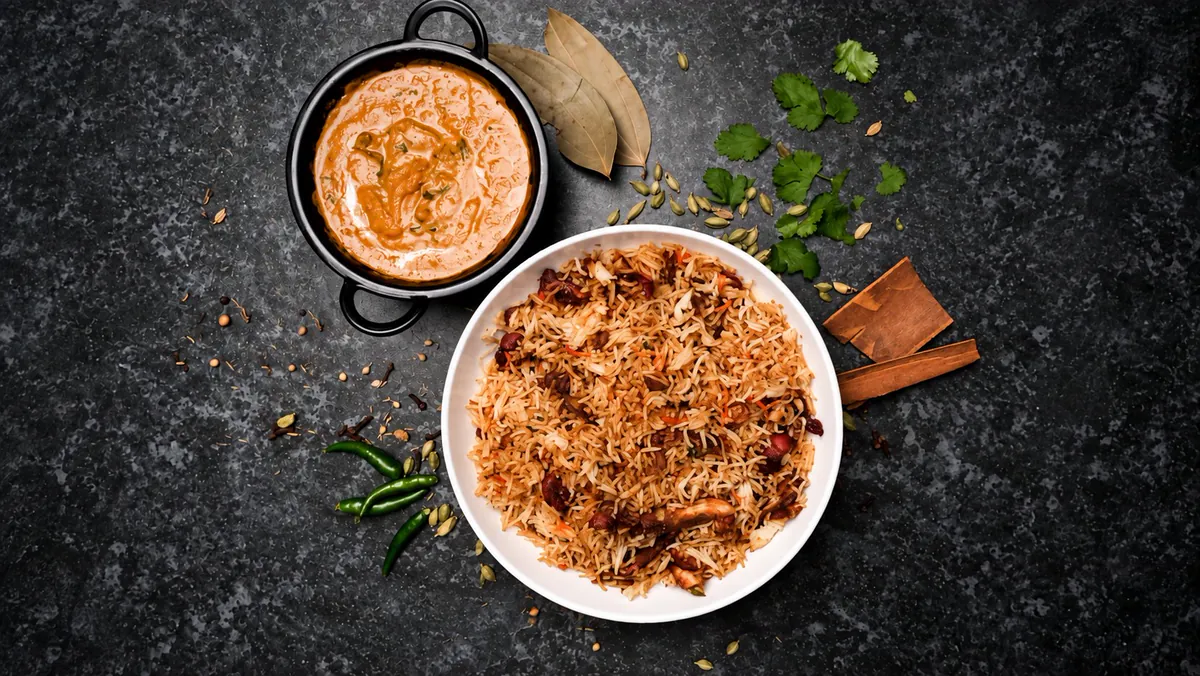
Dal bhat is not one fixed recipe. It is a meal framework built around dal, usually a lentil preparation, and bhat, cooked rice, with accompaniments that change by household, region, season and occasion.
Two anchorsDal and cooked rice
Built as a mealOften with vegetables, achar or other sides
Always variableHousehold, region and season matter
Dal bhat means a meal centred on dal, a pulse preparation, and bhat, cooked rice. Nepal Tourism Board materials commonly describe it with tarkari, or cooked vegetables, and achar, or pickle. Meat, greens, yogurt and other sides may join the plate, but no single arrangement represents every Nepali household or community.
- Core pairing
- Dal and bhat
- Common additions
- Tarkari and achar
- Meal pattern
- Everyday food and a complete shared spread
- One recipe?
- No; ingredients and accompaniments vary
- On our menu?
- No dish is currently named Dal Bhat
- Related menu items
- Dal Tarka, Sag Dal and several rice choices
What do the words dal and bhat mean?
Dal can name dried split pulses and dishes cooked from them; bhat means cooked rice in this meal context. Together they name the two anchors rather than prescribing every item on the plate. Nepal Tourism Board’s heritage-cuisine book presents dal bhat as “a set of Nepali dishes with staples”, while its culture guide describes dal, bhat and tarkari as a regular meal often accompanied by achar.
The distinction matters because English descriptions sometimes call dal simply “lentil soup”. That is a useful shortcut, not a full definition: pulse variety, thickness, seasoning and finishing can differ. Our separate guide to dal explains that range and compares the two dal dishes currently listed on our menu.
How is a dal bhat meal put together?
A familiar plate begins with rice and dal, then gains contrast from vegetables, pickle and sometimes greens, yogurt or meat. Tarkari is a broad term for a cooked vegetable preparation, not one universal curry. Achar can be fresh, fermented, ground or preserved, with ingredients and heat changing from kitchen to kitchen. Our achar guide explores that variety.
The components work as a meal rather than as isolated courses. Dal brings moisture to rice; achar supplies sharpness, salt or chilli; vegetables add their own textures. How people combine bites is personal. A restaurant thali may present separate bowls, while a home meal may be served and replenished differently. Neither format should be treated as the only authentic one.
Why does dal bhat vary so much?
Nepal contains plains, hills and high mountains, as well as more than a hundred ethnic groups and many languages. Crops, climate, markets, religious practice, household means and family taste all shape what accompanies the core pairing. Rice is prominent, yet millet, maize, buckwheat and potatoes also matter in different landscapes. “Nepali food” is therefore an umbrella, not a single kitchen.
Even the dal changes. Households may use different pulses, combine them, keep them relatively thin or cook them thicker. Tempering, aromatics and chilli are choices rather than universal requirements. For the wider context, read our introduction to Nepalese food culture and the guide to timmur and jimbu.
Is dal bhat an everyday meal or celebration food?
Official tourism materials describe rice, dal and curry as a Nepali staple, so dal bhat is strongly associated with ordinary nourishment. That does not mean every person eats the same plate twice daily, or that rice is equally available and preferred everywhere. “Everyday” signals the meal’s familiar role, not a survey result about every citizen.
The framework can also expand for guests, family gatherings and special occasions. More vegetables, meat, fried items, yogurt or sweets may make a spread celebratory. The point is flexibility: a modest meal and a generous feast can share the dal-and-rice foundation while expressing very different circumstances.
How should a first-time diner approach dal bhat?
Start by tasting each accompaniment, then combine rice with a little dal and add achar or vegetables in amounts that suit you. There is no need to chase a performance of authenticity. In some homes people eat with the right hand; in restaurants cutlery is readily used. Follow your host or choose the method that is comfortable and respectful.
Ask before assuming heat or dietary suitability. Dal and vegetable dishes can be plant-based, but ghee, butter, cream or cross-contact may matter. A name alone cannot answer an allergy question. Our ordering guide offers a practical way to build a balanced shared table.
Common questions
Is dal bhat always vegetarian?
No. The core dal-and-rice pairing can be vegetarian, but accompaniments may include meat and recipes may use dairy or other animal products.
Is dal bhat one dish?
It is better understood as a meal framework or set of components than as one standardised recipe.
Is dal bhat always spicy?
No single heat level applies. Achar may be hot, while dal and vegetables vary by cook.
Does the restaurant serve it?
No item is currently named Dal Bhat. Check the live menu for the dal, rice and vegetable dishes actually offered.
Source notes
Reviewed 19 September 2026. Where this guide mentions our restaurant, details are checked against the current dine-in menu. Wider cultural, historical and ingredient claims are checked against the cited sources below. How we research and correct our guides.
- Nepal Tourism Board: Experience Nepal heritage cuisine recipe book, for its dal bhat description and documented preparation example.
- Nepal Tourism Board: Culture, for the regular-meal context and caution that food habits differ by region.
- UN Food and Agriculture Organization: pulses, for the definition of pulses.
- The Great Kathmandu dine-in menu, consulted 18 September 2026 for every restaurant-specific statement.
Visit our family-run restaurant.
Join us in West Didsbury, where the Dangol family has welcomed Manchester since 1986, or order delivery directly from us.