
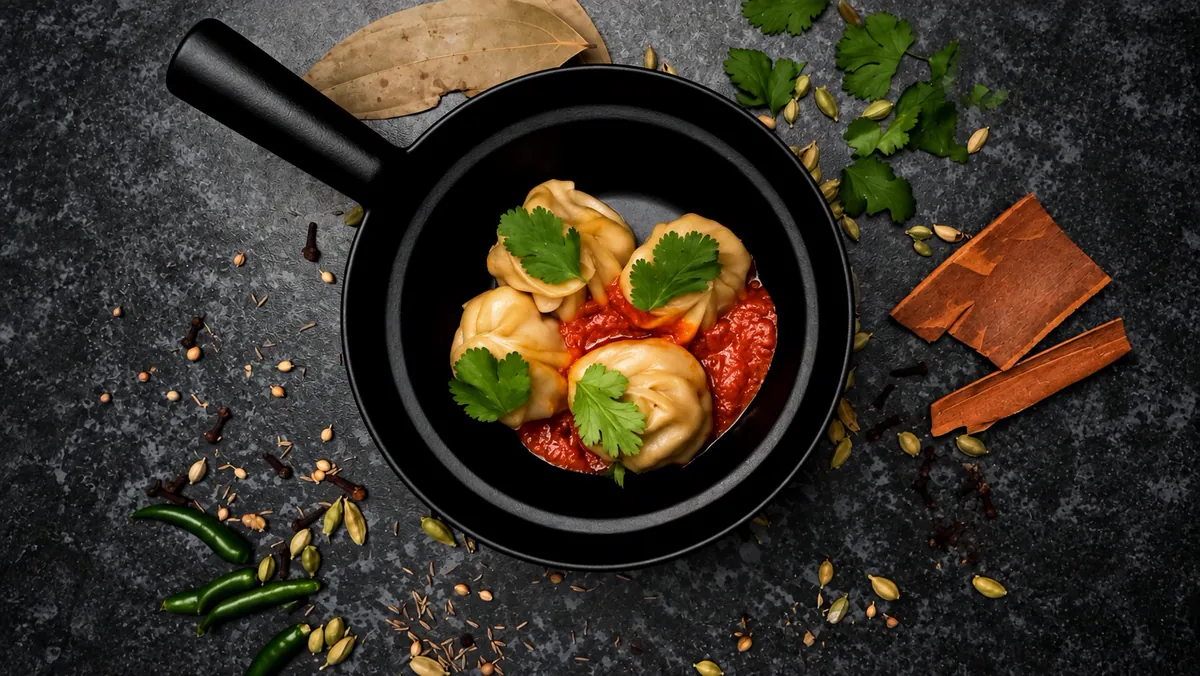
Nepalese food—also described as Nepali food—is not one uniform cooking style. It reflects Nepal’s regions and communities, with Indian and Tibetan influences alongside distinct Newari, Thakali and other traditions. Common touchpoints include dal, rice, vegetables, achar and momo; at The Great Kathmandu, that wider story appears in dishes such as Mo:Mo, Kathmandu Choila and Aloo Tama.
- Scope
- Many regional and community food traditions, not a single fixed cuisine.
- Everyday pattern
- Dal, bhat, tarkari and achar are a widely recognised combination.
- Popular snack
- Momo—filled dumplings commonly steamed or fried.
- Flavour and heat
- Both vary by dish; aromatic and highly spiced do not always mean very hot.
- At our restaurant
- Nepalese house dishes sit alongside tandoori cooking and familiar Indian restaurant favourites.
What shapes Nepalese food culture?
Nepal’s food habits differ by place and community. The Nepal Tourism Board describes regional variation and notes influences from both Indian and Tibetan cooking, while also drawing attention to Newari and Thakali traditions. That makes it more accurate to speak about Nepalese food cultures than one rigid national formula.
Ingredients, cooking methods and the role of a dish can change between homes and regions. A food served every day in one setting may be connected with a festival or special occasion in another. Recipes also travel: families adapt them to available ingredients while retaining the flavours and techniques that matter to them.
For diners, this means that a Nepalese menu is best explored dish by dish. The name of a dish, its texture, its heat and the way it is served usually tell a more useful story than broad labels alone.
What does an everyday Nepalese meal look like?
A widely recognised everyday pattern is dal, bhat and tarkari: lentils, rice and vegetables, often accompanied by achar. It is a balanced arrangement of separate elements rather than one single curry, and the details change with household, season and region.
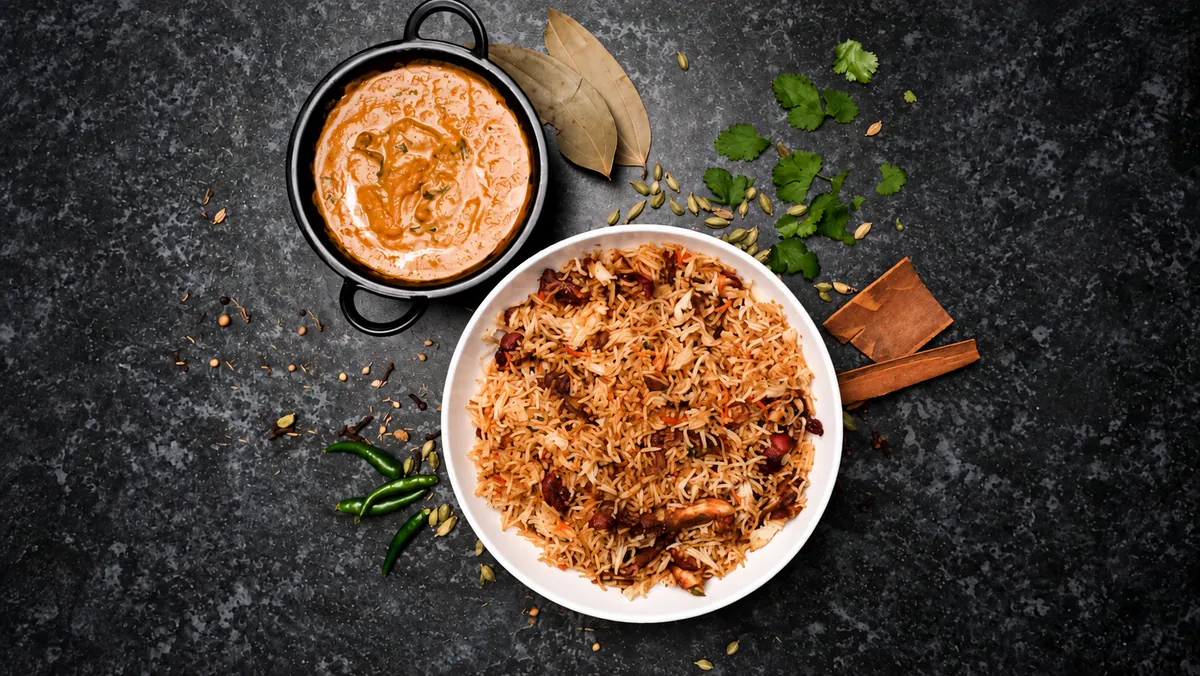
Our current menu is a restaurant menu rather than a complete survey of daily life in Nepal, but diners will recognise related building blocks. Dal Tarka pairs lentils with ginger and garlic; boiled or pillau rice provides the grain; mixed vegetables, Aloo Channa and Sag Dal offer vegetable and pulse dishes; lime pickle and chutneys bring sharp or savoury contrast.
Those connections should not be read as a claim that every combination is a traditional dal bhat set. They simply show how familiar ingredients and ways of composing a meal continue to appear on a Manchester restaurant table.
Why are momo so closely associated with Nepal?
Momo are filled dumplings, usually enclosed in a wheat-flour wrapper and steamed, although fried and soup-based versions are also found. The Nepal Tourism Board describes them as one of the country’s most popular snacks.
Its heritage cuisine recipe book notes that momo are said to have reached Nepal from Tibet through Newari traders. “Said to” matters here: food histories travel through communities and are not always reducible to one certain origin story.
At The Great Kathmandu, an order of Mo:Mo contains six dumplings with a choice of minced lamb, chicken or vegan filling, served with tomato chutney. The menu advises that preparation can take more than 20 minutes.
How do food and family hospitality connect?
Food is part of everyday family life, but it also gathers people for festivals, visits and celebrations. The Nepal Tourism Board notes the role food plays in festivals across Nepal, while the exact customs and dishes differ between communities.
For The Great Kathmandu, the connection is personal. Gopal and Jhunu Dangol opened the restaurant on Burton Road in 1986, and the business has remained family-run through its first forty years. The menu has room for individual plates, set meals and table-filling dishes because guests arrive for many kinds of evening: a first visit, a regular dinner, a birthday or a family gathering.
That lived restaurant history is the perspective behind this guide. It does not stand in for every Nepalese household; it is one family’s route from Kathmandu to Manchester and one menu shaped over four decades.
Source notes
The cultural overview and general food descriptions above were checked against Nepal Tourism Board material. Restaurant dish descriptions come from The Great Kathmandu’s current dine-in menu.