
Lentils and pulses, explained
What is dal?
Dal can refer to split pulses and to a cooked dish made from them. There is no one universal dal recipe: our menu alone offers ginger-and-garlic Dal Tarka and creamy spinach-and-lentil Sag Dal.
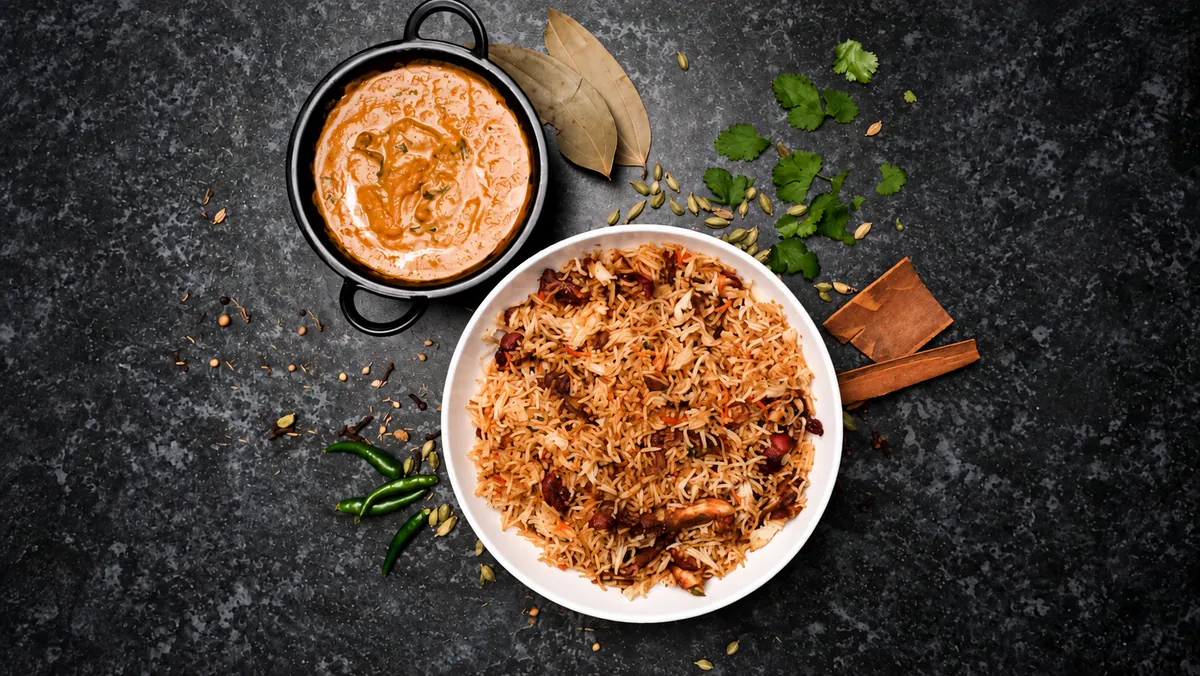
Two meaningsPulses and the prepared dish
Two menu choicesDal Tarka and Sag Dal
VegetarianBoth are also marked gluten-free
Dal—also written dhal—can mean dried, split pulses such as lentils, or a dish cooked from them. Recipes may be thick or loose and seasoned in many different ways. At The Great Kathmandu, Dal Tarka is lentils cooked with ginger and garlic; Sag Dal combines spinach and lentils with cream, herbs and spices.
- Main ingredient
- Pulses; our menu descriptions say lentils
- Dal Tarka
- Ginger and garlic; side or main
- Sag Dal
- Spinach, lentils, cream, herbs and spices
- Printed labels
- Both vegetarian and gluten-free
- Heat level
- No heat rating printed for either dish
- Exact lentil variety
- Not specified on the current menu
Does dal mean an ingredient or a finished dish?
It can mean both. Cambridge Dictionary defines dal as dried, split pulses and as a dish made by cooking and flavouring them. The UN Food and Agriculture Organization describes pulses as the dried edible seeds of leguminous plants, a group that includes lentils, chickpeas and dry beans. “Dal” therefore makes sense as both pantry language and menu language.
That double meaning can confuse first-time diners. A menu may name the pulse, the seasoning or another principal ingredient alongside dal. Thickness, colour, heat and aromatics can vary. It is safer to read the individual description than to expect every dal to match one remembered version.
Nepal Tourism Board's heritage-cuisine materials include dal within the wider context of Nepali meals, but Nepal's food culture is regionally and culturally diverse. Our Nepalese food culture guide gives that broader picture.
Dal is a family of pulse dishes, not one fixed colour, consistency or recipe.
What is Dal Tarka on our menu?
Our current menu describes Dal Tarka as lentils cooked with ginger and garlic. It is offered as a £6.50 side or an £8.95 main at publication and is marked vegetarian and gluten-free. No particular lentil, oil, heat level or tempering method is published, so this guide does not invent one.
The word tarka is often associated with seasoning heated in fat and added to a dish, but methods and spellings vary. That general tradition should not be used to reverse-engineer our ingredients. For allergy or vegan questions, the restaurant's current information matters more than an assumed recipe.
How is Sag Dal different?
Sag Dal combines spinach and lentils cooked with cream, herbs and spices. It costs £9.95 and is marked vegetarian and gluten-free. The spinach and cream make its published ingredient profile different from the simpler ginger-and-garlic description for Dal Tarka.
“Sag” or “saag” broadly points to leafy greens in South Asian food vocabulary. On this menu the green is specified as spinach, so no further interpretation is needed. Because cream is explicitly listed, Sag Dal is not suitable for a vegan order and is relevant to diners with a milk allergy.
How should you order dal?
Dal can be a main, a side or part of a larger shared meal. Dal Tarka's two portion prices make that flexibility explicit. As a side, it can add lentils and a softer texture beside a dry dish, paneer, vegetables or tandoor cooking. As a main, it can sit with rice or bread and another vegetable dish.
The Vegetarian Set Meal includes “dal” alongside onion pakoda, paneer pakoda, mixed vegetables, muttar paneer, pillau rice and nan. The set description does not state whether that dal is Dal Tarka or Sag Dal, so we do not assume which one it is. Our ordering guide shows how to balance a shared table, while the bread guide compares common accompaniments.
Chickpeas are pulses too, but our chickpea dishes—Aloo Channa, Kabuli Channa and Swadilo—are not labelled dal. Ingredient family does not override the menu's chosen dish name.
Is dal vegetarian, vegan or gluten-free?
Both Dal Tarka and Sag Dal are marked vegetarian and gluten-free on our menu. Sag Dal explicitly contains cream and is therefore not vegan. Dal Tarka does not list dairy in its short description, but it is not marked vegan, so this page does not claim that it is.
If you have coeliac disease, a milk allergy or another dietary requirement, a printed marker is the start of the conversation rather than the end. Tell the team before ordering and ask about current ingredients and cross-contact. For the explicitly marked vegan choices, see our vegetarian and vegan guide.
Common questions about dal
Are lentils and dal the same thing?
Lentils are an ingredient. Dal can refer to split pulses or a prepared pulse dish, so the words overlap without being exact synonyms in every sentence.
Is dal always yellow?
No. Different pulses and ingredients produce different colours. Our menu does not identify the lentil varieties used, so colour should not be inferred.
Is dal always mild?
No universal heat rule applies. Neither of our dal dishes has a printed heat rating; ask the team if chilli sensitivity matters to you.
Can I see current prices?
Yes. Check the live dine-in menu; prices here were checked on 18 September 2026.
Source notes
- The Great Kathmandu dine-in menu, consulted 18 September 2026, for restaurant-specific descriptions, prices and dietary markers.
- Cambridge Dictionary: dal, for the ingredient and dish meanings.
- UN Food and Agriculture Organization: pulses, for the general definition of pulses as dried edible legume seeds.
- Nepal Tourism Board: Culture, for wider cultural context.
- Food Standards Agency: allergen guidance, for UK allergy-information context.
Add dal to your West Didsbury table.
Book our family-run restaurant, established in 1986, or order delivery directly from us.