
Shapes and sauces, explained
What is kofta?
Kofta broadly means seasoned balls made from meat, cheese or vegetables. Our menu takes one clear route: minced chicken or lamb meatballs in a mild, rich tomato-and-cream sauce.
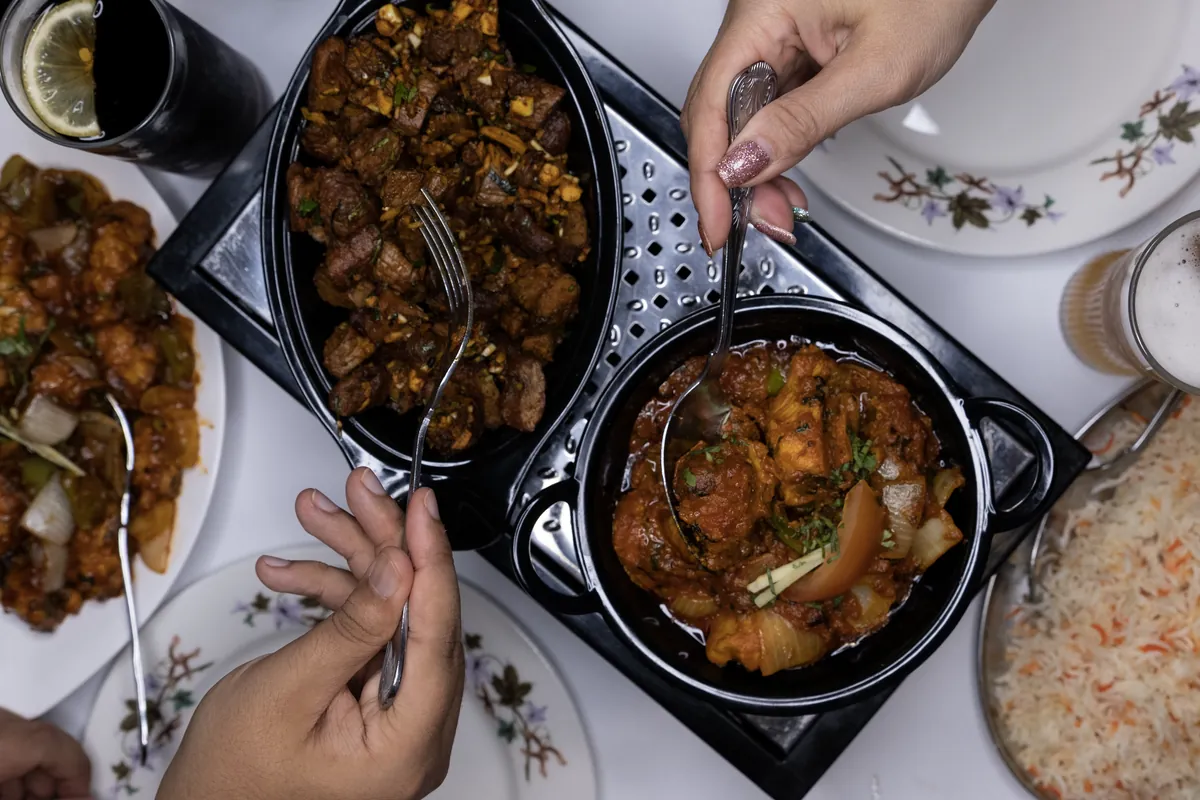
Our koftaMinced chicken or lamb meatballs
The sauceRich tomato and cream
Menu markersMild and contains nuts
Kofta is a broad South Asian dish category built around seasoned balls that may be made from meat, cheese or vegetables. At The Great Kathmandu, Kathmandu Kofta Makhanwala means minced chicken or lamb meatballs in a rich tomato-and-cream sauce. It costs £17.95 and is marked mild and containing nuts.
- Dish
- Kathmandu Kofta Makhanwala Chicken or Lamb
- Shape
- Meatballs
- Meat choice
- Minced chicken or lamb
- Sauce
- Rich tomato and cream
- Price
- £17.95
- Markers
- Mild; contains nuts
What does kofta mean?
Cambridge Dictionary defines kofta as a South Asian dish of balls made from meat, cheese or vegetables mixed with spices, or as one of those individual balls. A Smithsonian foodways account similarly traces kofta as a word for meatballs that can also refer to vegetable balls served with or without sauce. The category is therefore wider than meatballs alone.
Shape does not establish the filling, cooking method or sauce. Our restaurant’s full dish name and description are what narrow the choice here: minced chicken or lamb meatballs served in a rich tomato-and-cream sauce.
What is Kathmandu Kofta Makhanwala?
Our house-special version offers a choice of minced chicken or minced lamb formed into meatballs. It is served in a rich tomato-and-cream sauce and costs £17.95. The dish is marked mild and carries a contains-nuts marker.
No vegetarian kofta appears on our current dine-in menu, even though the wider definition allows cheese or vegetable kofta. It would be inaccurate to turn that general possibility into a restaurant option. For all current choices, use the live dine-in menu.
“Kofta” gives you the shape; “Makhanwala” tells you this version is a rich, sauce-led main.
What does Makhanwala add to the dish?
On our menu, makhan and makhanwala dishes share a family resemblance: a rich tomato-and-cream sauce, a mild label and a contains-nuts marker. Kofta changes the central texture by placing minced-meat balls into that sauce rather than chicken pieces, paneer, fish or prawns.
Makhanwala is not a promise that every restaurant uses an identical formula. Our makhani and makhanwala guide compares every version on this menu and explains why the individual description matters more than a generic recipe.
How is kofta different from keema or kebab?
All can begin with minced meat, but the final form changes the experience. Keema Peas keeps minced lamb loose with garden peas, herbs and spices. Seekh Kebab / Reshmi Kebab seasons minced meat and cooks it on skewers. Kofta forms meatballs and, in this case, serves them in a creamy tomato sauce.
Our keema guide and seekh-versus-reshmi guide make those distinctions without claiming that every recipe everywhere follows one rule. Choose kofta when a sauce-led main and rounded meatball texture appeal more than loose mince or a dry skewer.
What makes Kofta Makhanwala distinct on this menu?
The sauce connects it to several mild makhan dishes, but the meatball form makes it the only listed kofta. Kathmandu Chicken Makhanwala uses tandoori chicken on the bone, Makhan Chara uses chicken tikka, and Mis Mas Makhanwala combines several tandoori meats. Makhan Paneer, Makhan Fish and Makhan King Prawn change the main ingredient again.
Kofta therefore suits someone who wants minced meat with a softer, rounded texture rather than whole chicken, tikka pieces, cheese or seafood. Every one of those named makhan dishes carries a mild and contains-nuts marker, but only the individual menu line tells you which main ingredient will arrive.
How should you order kofta?
First choose chicken or lamb. Then use the rest of the table for contrast: a dry starter, plain rice, bread or a vegetable dish can sit beside the rich sauce. Because the kofta is mild, diners seeking a chilli-led contrast might share a separate hot dish rather than trying to change what this dish is.
Our ordering guide suggests balancing sauce, texture and main ingredients. The bread guide helps if you want something for scooping the tomato-and-cream sauce.
Does kofta contain dairy or nuts?
Yes. Cream is explicitly named and the dish carries a contains-nuts marker. It is not marked gluten-free, vegetarian or vegan. The absence of a gluten-free marker must not be read as a definitive ingredient list; it simply means this page does not claim suitability.
For any allergy, intolerance or coeliac disease, ask the team for current information before ordering. The Food Standards Agency emphasises up-to-date allergen records and cross-contact controls, so a live conversation is more reliable than assumptions based on the dish name.
Common questions about kofta
Is kofta always meat?
No. The wider category can include cheese or vegetables, but our current kofta dish uses minced chicken or lamb.
Is your kofta spicy?
It is marked mild. Mild refers to chilli heat, not an absence of herbs or spices.
Is it served dry?
No. Our kofta meatballs are served in a rich tomato-and-cream sauce.
Does it contain nuts?
Yes, it carries a contains-nuts marker. Tell the team about allergies before ordering.
Source notes
Reviewed 19 September 2026. Where this guide mentions our restaurant, details are checked against the current dine-in menu. Wider cultural, historical and ingredient claims are checked against the cited sources below. How we research and correct our guides.
- The Great Kathmandu dine-in menu, consulted 18 September 2026, for the dish name, description, choices, price and markers.
- Cambridge Dictionary: “kofta”, for the broad definition covering meat, cheese and vegetable balls.
- Smithsonian Institution: South Asian Cooking, for the foodways account of meat and vegetable kofta served with or without sauce.
- Food Standards Agency: allergen guidance, for UK allergy-information context.
Share our family’s house specials.
Book in West Didsbury or order delivery direct from our restaurant, established in 1986.