
Vegetables, explained
What is bhindi?
Bhindi is a South Asian name for okra: the green, ridged pod also called lady's finger. Its tender bite and natural thickening quality make texture central to how the vegetable is cooked.
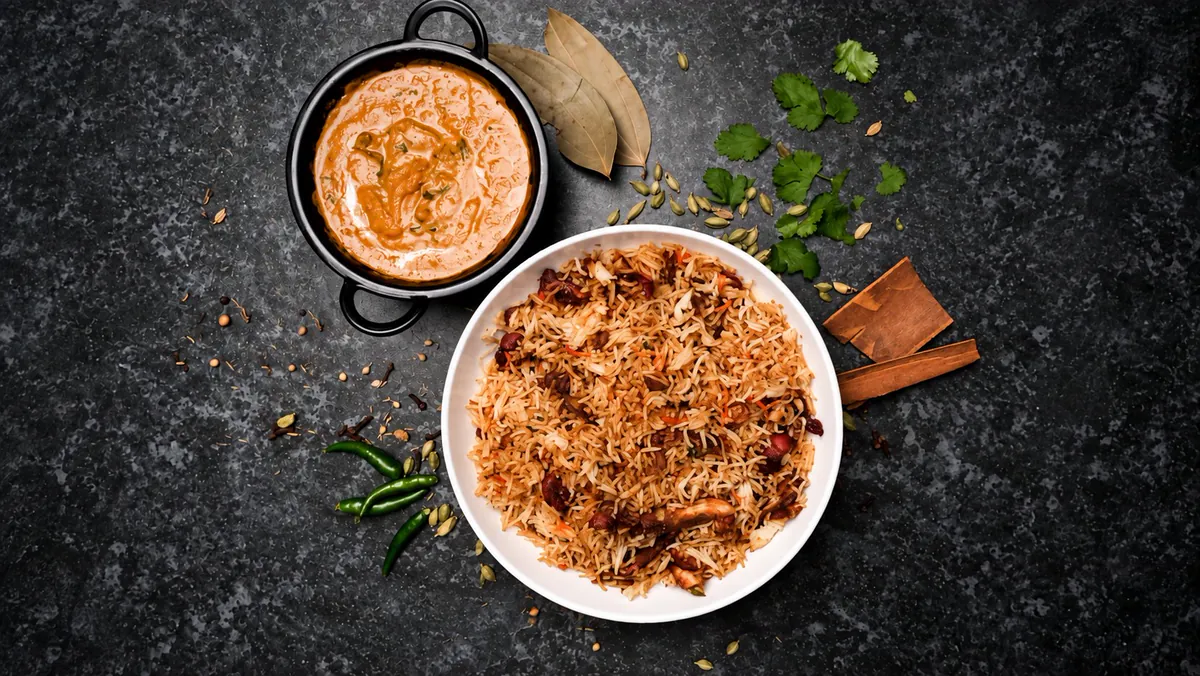
BhindiA common name for okra
Edible partYoung ridged seed pods
Our dishOkra cooked with condiments
Bhindi means okra, the edible immature pod of Abelmoschus esculentus. Cut okra releases mucilage, a natural substance that can thicken and soften a dish; dry, hot cooking can produce a firmer result. The Great Kathmandu's Bhindi is described simply as okra cooked with condiments, priced at £9.95 and marked vegetarian and gluten-free.
- English name
- Okra or lady's finger
- Botanical name
- Abelmoschus esculentus
- Plant family
- Malvaceae, the mallow family
- Used part
- Immature seed pod
- Our menu
- Okra cooked with condiments
- Printed markers
- Vegetarian and gluten-free
What kind of vegetable is okra?
Okra is the immature fruit of Abelmoschus esculentus, a warm-climate plant in the mallow family. Kew describes an upright annual with hibiscus-like flowers and ridged, pointed fruits containing many seeds. The tender pods are harvested before maturity, when older pods would become fibrous.
Its precise origin is uncertain. Kew's detailed page brings together sources that point to different possible origins and also notes that the cultivated crop is not certainly known in a truly wild state. It is therefore safer to describe okra as a crop with a complex cultivation history than to assign it one certain birthplace.
“Bhindi,” “okra” and “lady's finger” can name the same vegetable. Dish names and spellings vary by language and region.
Why can okra feel silky or firm?
Okra pods contain mucilage, a natural substance that becomes noticeable when pods are cut and cooked with moisture. Kew records okra's use for thickening soups and stews. That silky quality is a feature of the plant, not evidence that it was mishandled.
University of Florida IFAS guidance explains that high, dry heat can reduce a slimy texture and that acidic ingredients can also limit it. Cutting and moist cooking expose more mucilage, so method changes the result. Neither a firmer nor a silkier preparation is inherently the only correct one.
Our menu does not publish the cut, pan method or cooking time for Bhindi, so these are general culinary principles rather than a reconstruction of the restaurant recipe.
Okra's texture is part of its character—and the cooking method decides whether it feels crisp, tender or silky.
What should you eat with Bhindi?
Bhindi can add a distinct green vegetable and a less sauce-led texture to a shared table. Pair it with a lentil or chickpea dish for contrast, or place it beside a meat main and rice. If several diners are sharing, its recognisable pieces can break up a group of smoother sauces.
There is no compulsory bread or rice. Plain boiled basmati leaves the vegetable's seasoning prominent; pillau adds its own light flavour; roti or nan provides a hand-held accompaniment. Our ordering guide gives a practical table-building approach, and our bread guide compares the options.
Is Bhindi vegetarian, vegan or gluten-free?
The menu marks Bhindi vegetarian and gluten-free. It does not mark it vegan, so this page does not claim vegan suitability. A vegetable name alone cannot establish cooking fat, every seasoning or cross-contact.
For coeliac disease, allergies or vegan requirements, tell the team before ordering and confirm the current preparation. Food Standards Agency guidance says written allergen information works best when supported by conversation. A menu marker is valuable, but the kitchen has the current operational detail.
Common questions about bhindi
Are bhindi and okra the same?
Yes. Bhindi is a widely used South Asian name for the vegetable known in English as okra or lady's finger.
Why is okra sometimes slippery?
Its pods release natural mucilage when cut and cooked with moisture. That substance can thicken sauces and soups.
Is Bhindi hot?
Our menu prints no heat rating. It says “cooked with condiments,” which is not a full spice list.
Does your Bhindi contain potatoes?
Potato is not named in its menu description. Aloo dishes list potato explicitly; Bhindi does not.
Source notes
Reviewed 19 September 2026. Where this guide mentions our restaurant, details are checked against the current dine-in menu. Wider cultural, historical and ingredient claims are checked against the cited sources below. How we research and correct our guides.
- The Great Kathmandu dine-in menu, consulted 18 September 2026, for the restaurant-specific description, price and dietary markers.
- Kew Science, Plants of the World Online: Abelmoschus esculentus, for botanical identity, qualified origin discussion, pod morphology, uses and mucilage.
- University of Florida IFAS: cooking okra and aubergine, for high, dry heat and acidic ingredients as ways to manage okra texture.
- Food Standards Agency: allergen information for non-prepacked food, for UK restaurant allergen-information context.
Try Bhindi in West Didsbury.
Book our family-run restaurant, established in 1986, or order delivery directly from us.