
Accompaniments, explained
What is raita?
Raita is a South Asian yoghurt accompaniment, often mixed with vegetables or herbs. Ours combines yoghurt, cucumber, tomatoes and herbs: a fresh side to place alongside the rest of your meal.
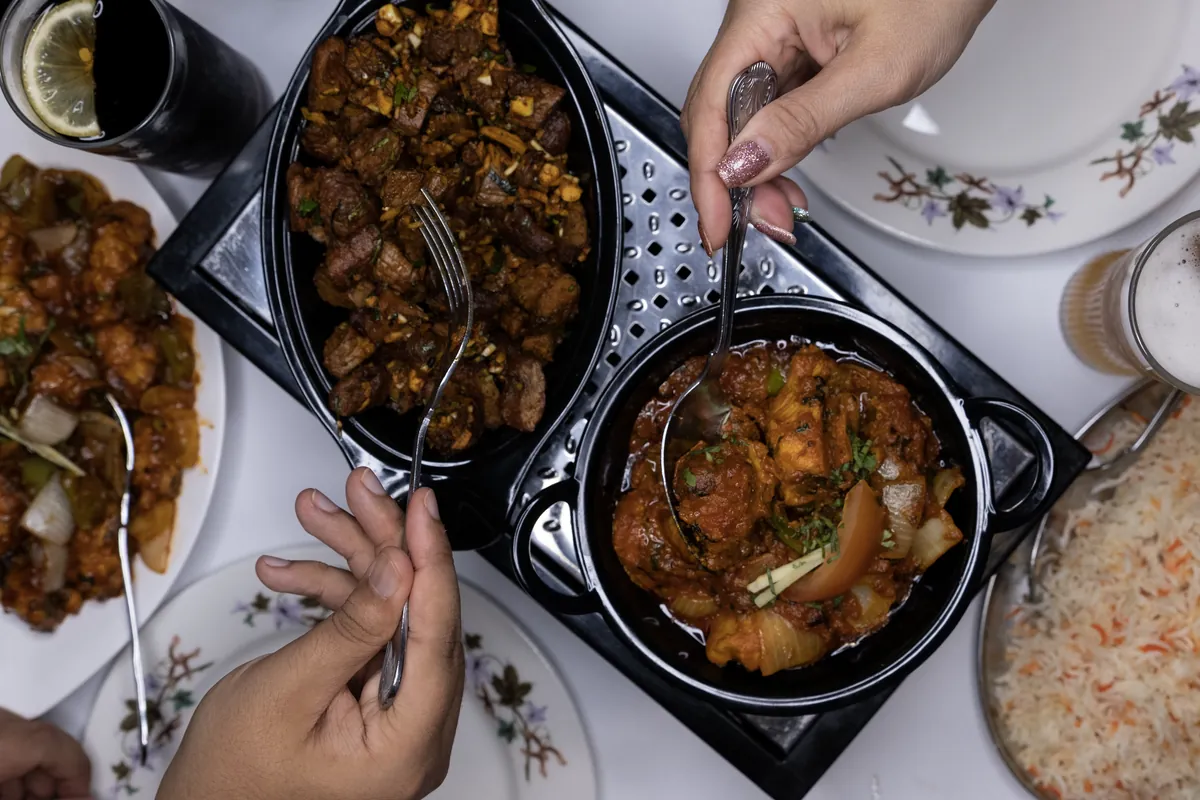
Yoghurt sideServed cold as an accompaniment
Our versionCucumber, tomatoes and herbs
Menu markersVegetarian and gluten-free
Raita is a yoghurt-based South Asian side containing small pieces of vegetables and often herbs or seasoning. Recipes vary. The Great Kathmandu's menu lists Raita / Yoghurt as yoghurt with cucumber, tomatoes and herbs, priced at £3.95 and marked vegetarian and gluten-free.
- Base
- Yoghurt
- Our additions
- Cucumber, tomatoes and herbs
- Menu section
- Extras
- Price
- £3.95 at publication
- Printed markers
- Vegetarian and gluten-free
- Milk
- Explicitly present as yoghurt
What does “raita” mean?
Cambridge Dictionary supplies the broad English-language definition: a South Asian yoghurt dish with pieces of raw vegetables. An Indian government culinary booklet provides one documented cucumber version made with yoghurt, grated cucumber, cumin, black salt and coriander. That recipe is evidence of a real preparation, not a universal formula; other versions use different vegetables, herbs and seasonings.
The name therefore tells you the broad family of the accompaniment. It does not tell you every ingredient, seasoning or allergen. A reference recipe cannot establish what a restaurant serves, and regional or household traditions should not be compressed into one “authentic” list.
At our restaurant, the printed description provides the relevant answer: yoghurt with cucumber, tomatoes and herbs. It does not name the herb varieties, seasoning or proportions, so this guide does not guess them.
Raita is best understood as a flexible yoghurt accompaniment, not one fixed recipe.
What is in The Great Kathmandu's raita?
Our current dine-in menu calls the item Raita / Yoghurt. Its published ingredients are yoghurt, cucumber, tomatoes and herbs. It costs £3.95 at publication and appears in the Extras section. The menu marks it vegetarian and gluten-free.
The short description deliberately leaves some questions open. It does not say which herbs are used, whether the cucumber is grated or diced, or which spices may season it. Those details can change and should come from the team when they matter. It is also different from the mint yoghurt sauce listed with our Pappadum: two yoghurt accompaniments should not be treated as the same preparation merely because they share a dairy base.
Why serve raita with a meal?
Raita brings cool temperature, yoghurt tang and the fresh texture of vegetables to a table that may also include warm breads, rice, charcoal cooking and sauces. Both Cambridge and the Indian government booklet place it beside other dishes, including spicy food, but neither justifies calling it a guaranteed antidote to chilli. Tolerance is personal, so choose a heat level you enjoy.
Contrast is the useful idea. A spoonful can sit beside a bite of biryani, a tandoor-cooked dish or a vegetable main without becoming the centre of the plate. It can also give a shared table a fresh component when several dishes are rich. Explore our curry heat guide for the restaurant's actual mild, hot and very-hot labels.
When should you add raita?
Add it when your table wants a yoghurt accompaniment to share, particularly with rice-led meals or contrasting hot and dry dishes. A biryani, vegetable curry and raita can create three distinct textures. With breads, it can be spooned rather than treated as a separate course. There is no compulsory pairing.
Raita is an extra, so remember it is not automatically included with every curry or rice dish. The biryanis come with vegetable curry according to their descriptions, not raita. If you are planning a first visit, our ordering guide suggests how to combine starters, mains and accompaniments without over-ordering. The biryani and pilau guide can help choose the rice.
Is raita vegetarian, vegan or gluten-free?
Our Raita / Yoghurt is marked vegetarian and gluten-free. Because yoghurt is explicitly listed, it contains milk and is not vegan. Those statements apply to this menu item as currently described, not to every raita made elsewhere.
Gluten-free labelling does not replace an allergy conversation. If you have coeliac disease, a milk allergy or another requirement, tell the team before ordering and ask about the current ingredient and cross-contact information. The Food Standards Agency says allergen information for loose restaurant food works best in writing and with a conversation. Our vegetarian and vegan guide lists options carrying explicit menu markers.
Common questions about raita
Is raita the same as tzatziki?
No. They are different culinary preparations, even though both may combine yoghurt and cucumber. Read each dish on its own terms.
Is raita always made with cucumber?
No. Recipes vary. Cucumber is specifically listed in The Great Kathmandu's version.
Is your raita spicy?
The menu gives no heat rating and does not list chilli. That is not a promise that no seasoning is present; ask the team if sensitivity matters.
Does it contain dairy?
Yes. The menu explicitly identifies yoghurt, which contains milk.
Source notes
Reviewed 19 September 2026. Where this guide mentions our restaurant, details are checked against the current dine-in menu. Wider cultural, historical and ingredient claims are checked against the cited sources below. How we research and correct our guides.
- The Great Kathmandu dine-in menu, consulted 18 September 2026, for the restaurant-specific description, price and dietary markers.
- Cambridge Dictionary: raita, used only for the broad English-language definition.
- Government of India, Directorate of Field Publicity: Flavours of Indian Food, for one documented cucumber-raita formulation and its accompaniment role.
- Food Standards Agency: allergen information for non-prepacked food, for guidance on written information and conversations.
- Food Standards Agency: allergen labelling guidance, for milk's status among the 14 regulated allergens.
Build your West Didsbury table.
Book our family-run restaurant, established in 1986, or order delivery directly from us.