
Rice dishes, explained
Biryani vs pilau: what is the difference?
Both are seasoned rice dishes, but “biryani” usually names a more substantial rice-centred dish while pilau can also be an accompaniment. The most accurate answer always comes from the menu in front of you.
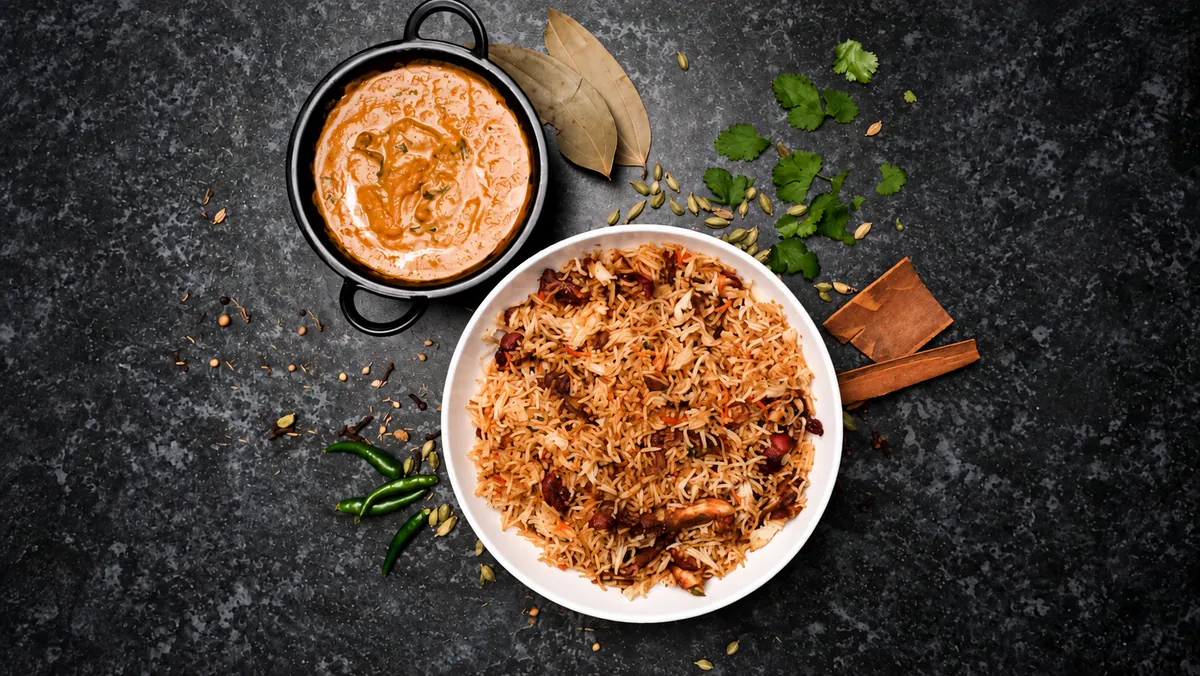
BiryaniA rice-centred main on our menu
Pillau riceA lightly flavoured accompaniment
Three choicesLamb, chicken or Kathmandu Special
Cambridge Dictionary defines biryani as a South Asian rice dish cooked with meat, fish or vegetables and spices, and pilau as rice cooked in a spicy liquid, sometimes with meat or vegetables. That overlap means there is no useful one-line rule for every region or kitchen. At The Great Kathmandu, our named biryanis are complete mains served with curry or sauce; Pillau Rice is a side.
- Lamb Pillau Biryani
- Basmati rice, lamb, mild spices and vegetable curry
- Chicken Pillau Biryani
- Basmati rice, chicken, mild spices and vegetable curry
- Kathmandu Special
- Lamb, chicken, prawn, rice, egg, cashews, onions and sauce
- Pillau Rice
- Basmati rice with a hint of eastern flavour
- Vegetable Pillau
- Vegetables and rice with herbs, condiments and curry sauce
- Menu spelling
- Our menu uses “pillau” with two l's
What is the general difference?
In broad English-language usage, biryani is a composed South Asian dish in which rice shares the centre of attention with meat, fish, vegetables and spices. Pilau is seasoned rice that may contain other ingredients but can also serve as an accompaniment. Those are helpful categories, not rigid laws.
Recipes across South Asia and its diasporas differ in rice, seasoning, cooking sequence and presentation. Claims such as “all biryani is layered,” “all biryani uses one particular technique,” or “pilau is always simpler” erase real variation. We do not use those claims here. Our Nepalese and Indian food guide explains why overlapping words do not make distinct cuisines interchangeable.
Names provide a map; the menu description tells you what will actually arrive at your table.
What biryani does The Great Kathmandu serve?
Lamb Pillau Biryani and Chicken Pillau Biryani each combine basmati rice with the named meat and mild oriental spices. Both are served with vegetable curry and cost £17.95 at publication. Because the menu calls the spices mild, these can be useful options for diners who do not want the menu's hot or very hot curries, although individual sensitivity varies.
Kathmandu Special Pillau Biryani combines lamb, chicken, prawn and pillau rice, topped with boiled egg, cashew nuts and brown onions, and served with a rich sauce. It costs £20.95, is marked as containing nuts and is identified as Gopal's family favourite. That description is specific to our menu; it is not presented as a universal biryani formula.
Murgi Masala also comes with a special biryani for two to three people. It requires 24 hours' notice and is marked as containing nuts. See our ordering guide for that and other timing notes.
What about pilau rice and Vegetable Pillau?
Pillau Rice is listed in Breads & Rice as basmati rice with a hint of eastern flavour. It is a £3.95 accompaniment at publication and is marked vegetarian and gluten-free. Boiled Rice is the plainer alternative: plain boiled basmati rice, also marked vegetarian and gluten-free.
Vegetable Pillau is more substantial. The menu describes fresh vegetables cooked in rice with herbs and condiments, served with curry sauce. It costs £15.50 and is marked vegetarian. Vegetable Rice and Mushroom Rice offer further rice choices without a separate curry sauce in their descriptions.
The spelling varies in English. Cambridge uses “pilau”; our menu uses “pillau.” We preserve the restaurant's spelling when naming its dishes rather than treating one version as a different food.
Should you order biryani or curry with rice?
Choose biryani when you want rice, protein and seasoning integrated into a main, with curry or sauce alongside. Choose a curry plus Pillau Rice when you want sauce, protein and heat as separate choices. The curry heat guide can help.
A biryani can share a table with a starter or vegetable side, but it already includes rice and an accompaniment. Ask the team about portions for a group.
What should diners with allergies check?
The Kathmandu Special Pillau Biryani is explicitly marked as containing nuts and lists cashew nuts. Murgi Masala is also marked as containing nuts. Lamb and Chicken Pillau Biryani have no printed dietary marker, so do not infer that they are nut-free, dairy-free or gluten-free.
Pillau Rice and Boiled Rice are marked vegetarian and gluten-free; Vegetable Pillau is marked vegetarian but does not carry the printed gluten-free marker. Printed labels do not address every allergen or cross-contact question. Tell the team about an allergy before ordering and ask for current information about the whole dish and accompanying sauce.
Common questions about biryani and pilau
Is biryani always hot?
No. “Spiced” does not automatically mean chilli-hot. Our Lamb and Chicken Pillau Biryanis are specifically described as using mild spices.
Is pilau always vegetarian?
No. Pilau can contain meat or other ingredients. Our Pillau Rice is marked vegetarian, while our named Pillau Biryanis include lamb, chicken or mixed meat and seafood.
Does your biryani use a layered or dum method?
The menu does not specify a layering or sealed-pot method, so this guide does not claim one. Ask the team if a preparation detail is important to you.
Where are the current prices?
Read the live dine-in menu. Prices quoted here were checked on 18 September 2026 and may change.
Source notes
- The Great Kathmandu dine-in menu, consulted 18 September 2026, for restaurant-specific rice dishes, descriptions, prices and dietary markers.
- Cambridge Dictionary: biryani, for a broad English-language definition.
- Cambridge Dictionary: pilau, for a broad English-language definition and spelling variant.
- Food Standards Agency: allergen guidance, for UK allergy-information context.
Share a biryani in West Didsbury.
Book our family-run restaurant, established in 1986, or order delivery directly from us.