
Ingredient guide
What is jeera, and how is cumin used in cooking?
Jeera is cumin: a warm, earthy seed spice used whole or ground across South Asian cooking. Here is what the word means, how cumin differs from chilli heat, and where it appears explicitly on our West Didsbury menu.
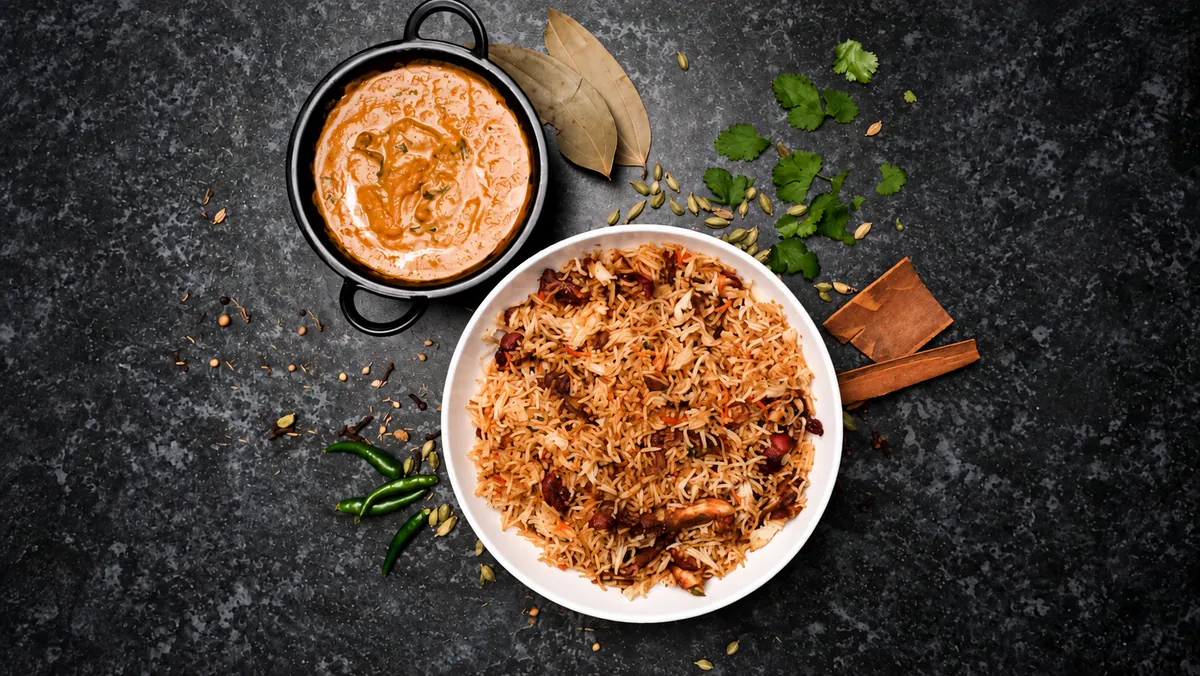
Jeera means cuminTwo names for the same familiar seed spice
Warm, not automatically hotAroma and chilli heat are different things
Named on our menuJeera Chicken or Lamb uses cumin seeds
Jeera is the South Asian name commonly used for cumin. The dried seeds of Cuminum cyminum can be cooked whole or ground into powder. Their flavour is warm, earthy and slightly bitter rather than inherently chilli-hot. Our menu names cumin directly in Jeera Chicken or Lamb, which is cooked with special herbs, spices and cumin seeds.
- English name
- Cumin
- Common menu name
- Jeera
- Plant
- Cuminum cyminum, a member of the Apiaceae family
- Forms
- Whole dried seeds or ground spice
- Typical character
- Warm, earthy, aromatic and gently bitter
- Our named dish
- Jeera Chicken or Lamb
What is jeera?
Jeera is cumin. On a menu, the two words do not describe separate spices: they point to the dried seed of the same aromatic plant. The Indian Council of Agricultural Research’s Institute of Spices Research identifies cumin as Cuminum cyminum and describes it as one of the most widely used spices in Indian cooking.
The word is useful because it tells you what a dish is choosing to foreground. A curry may contain many seasonings, but a name such as “jeera” signals that cumin is a defining part of the dish’s identity. That does not mean every jeera dish follows one recipe. The supporting ingredients, cooking order and balance still vary between kitchens.
Cumin also travels far beyond Nepalese and Indian food. The same official spice reference notes its importance in Middle Eastern, Mexican and Mediterranean cooking. Recognising jeera as cumin makes a restaurant menu feel less mysterious without flattening the many ways cooks use it.
Jeera describes aroma before heat: earthy cumin and hot chilli are different dimensions of flavour.
What does cumin taste like?
Cumin has a warm, earthy aroma with a slightly bitter edge. ICAR’s spice guide attributes its characteristic aroma primarily to a natural compound called cuminaldehyde. Diners do not need to know the chemistry to recognise the effect: cumin gives savoury food a deep, rounded fragrance that can sit underneath brighter ingredients such as ginger, tomato or fresh chilli.
That warmth is not the same as chilli heat. Cumin itself is not a promise that a dish will be hot. A cumin-led dish can be mild, medium or hot depending on the rest of its seasoning. Our menu does not assign Jeera Chicken or Lamb a heat marker, so guests who are sensitive to chilli should ask the team for current guidance rather than infer a heat level from the name.
Is jeera used whole or ground?
Both forms are widely used. Whole seeds keep their shape and can release aroma as they cook; ground cumin disperses more evenly through a sauce, marinade or spice blend. They are the same ingredient presented differently, but they do not create exactly the same texture or timing in a dish.
Our current description is unusually specific: Jeera Chicken or Lamb is cooked with “special herbs, spices and cumin seeds.” That lets us say the menu names seeds. It does not reveal the full recipe, quantities or cooking sequence, and this guide does not guess at those details.
Is cumin the same as garam masala?
No. Cumin is one spice. Garam masala is a blend whose contents can vary between cooks and regions. Cumin may appear in a blend, but the words are not interchangeable. The same distinction matters with methi, or fenugreek: each ingredient contributes its own character even when several spices meet in one dish.
This is also why “spiced” does not mean “very hot.” Spice can provide aroma, bitterness, sweetness, colour and warmth as well as chilli heat. Our curry heat guide uses the labels printed on our menu rather than treating every aromatic dish as fiery.
Common questions about jeera
Are jeera and cumin the same?
Yes. Jeera is the name commonly used for cumin in South Asian food and on restaurant menus.
Is cumin spicy hot?
Cumin is aromatic, earthy and slightly bitter, but it is not a chilli. The heat of a finished dish depends on its other ingredients.
Does your jeera dish use whole cumin?
The current menu explicitly says “cumin seeds.” We do not publish the complete kitchen method or claim more detail than that description provides.
Is Jeera Chicken or Lamb suitable for allergies?
The menu carries a gluten-free marker for the dish, but allergen safety depends on current ingredients and preparation. Tell the team about any allergy or dietary requirement before ordering.
Source notes
- The Great Kathmandu dine-in menu, consulted 18 September 2026, for the Jeera Chicken or Lamb name, description and dietary marker.
- ICAR—Indian Institute of Spices Research: Cumin, for the botanical identity, common forms, culinary use and flavour description.
Explore four decades of flavour in West Didsbury.
Join our family-run restaurant on Burton Road, or order delivery directly from us.