
Ingredients, explained
What is methi?
Methi is another name for fenugreek, a plant whose leaves and seeds are both used in South Asian cooking. The name tells you the ingredient family—not which part, form or quantity every kitchen uses.
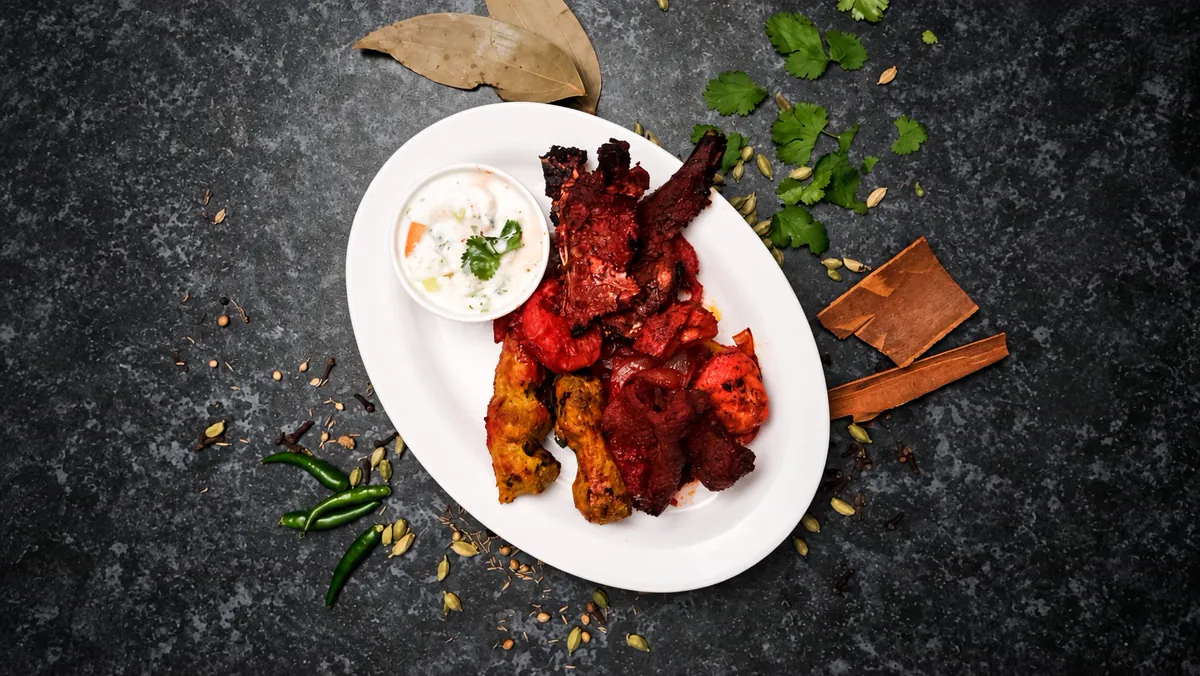
MethiA common name for fenugreek
Leaves and seedsBoth are used in cooking
On our menuTwo chicken-or-lamb dishes name methi
Methi means fenugreek. Oxford Learner's Dictionaries describes it as a plant whose leaves or seeds are used in South Asian cooking. Fresh leaves, dried leaves and seeds do not behave identically, so “methi” alone is not a complete recipe. Our menu names fenugreek in Methi Chicken or Lamb but does not disclose which form is used.
- English name
- Fenugreek
- Botanical name
- Trigonella foenum-graecum
- Usable parts
- Leaves and seeds are both culinary ingredients
- Our main-course choice
- Methi Chicken or Lamb
- Our house-special choice
- Tandoori Chicken Shak-Shu-Ka with Methi
- Exact form used
- Not stated on the current menu
What plant does methi come from?
Methi is a common South Asian name for fenugreek. Kew Science records its botanical name as Trigonella foenum-graecum, in the pea family. Oxford connects “methi” with leaves and seeds used in South Asian cooking.
It can therefore act as a leafy herb or seed spice. These references do not reveal where our ingredient was grown, its cultivar or processing.
This is a food guide, not medical advice; it makes no health claim for methi.
Methi is one plant with several culinary forms—so the word identifies an ingredient, not a standardised flavour formula.
Are fenugreek leaves and seeds the same in cooking?
They come from the same species but are different parts of the plant. Leaves may be used fresh or dried, while the seeds can be used whole or ground. Each form contributes differently to a dish because texture, concentration and the way it is added vary.
For that reason, seeing “methi” in a dish name does not justify guessing whether it contains fresh leaves, dried leaves—often called kasuri methi—or seeds. Nor does it tell you an exact amount. Our current menu lists fenugreek for one main but does not publish the form, so the team is the right source if that detail matters to you.
Methi is also not the same thing as garam masala. One names a particular plant ingredient; the other names a spice mixture whose composition varies. Fenugreek may appear in some blends and not others, but we do not claim it is part of our house blend.
What should you expect when ordering methi?
Expect fenugreek to be part of the seasoning profile, but do not expect one universal sauce, colour or heat level. Methi Chicken or Lamb and Tandoori Chicken Shak-Shu-Ka with Methi are structurally different dishes: one offers chicken or lamb as a main course, while the other centres on tandoori chicken on the bone within the house-special section.
If you prefer boneless meat or have a heat preference, ask the team before choosing. Neither dish has a printed heat rating. Our curry heat guide identifies dishes that are explicitly labelled, and our ordering guide can help pair a methi dish with vegetables, rice or bread.
Is methi vegetarian or gluten-free?
Fenugreek is a plant ingredient, but the full dish determines dietary suitability. Both methi dishes on our menu contain chicken or lamb and are therefore not vegetarian. Methi Chicken or Lamb is marked gluten-free; Tandoori Chicken Shak-Shu-Ka with Methi has no printed dietary marker.
An herb or spice name never guarantees an entire dish is free from allergens. Marinades, sauces and accompaniments may introduce ingredients not obvious from the title. Tell the team about an allergy before ordering and ask for current information about the complete dish and cross-contact.
Common questions about methi
Are methi and fenugreek the same?
Yes. Methi is a common name for fenugreek in South Asian food vocabulary.
Does methi mean leaves or seeds?
It may refer to the plant or culinary use of its leaves or seeds. A recipe or menu needs more detail to identify the precise form.
Is methi a curry?
Not by itself. Methi is an ingredient. Many distinct dishes can use it, and our two menu examples are not the same preparation.
Is your Methi Chicken or Lamb hot?
The current menu provides no heat rating. Ask the team for current guidance instead of inferring heat from the word methi.
Where can I confirm current availability?
Check the live dine-in menu. Prices and descriptions here were checked on 18 September 2026.
Source notes
- The Great Kathmandu dine-in menu, consulted 18 September 2026, for restaurant-specific dish names, descriptions, prices and dietary markers.
- Oxford Learner's Dictionaries: methi, for the general culinary meaning.
- Kew Science, Plants of the World Online: Trigonella foenum-graecum, for botanical identity and classification.
- Food Standards Agency: allergen guidance, for UK allergy-information context.
Explore methi in West Didsbury.
Book our family-run restaurant, established in 1986, or order delivery directly from us.