
Mild curries, compared
Korma vs pasanda: what is the difference?
Both are mild, creamy lamb-or-chicken curries on our menu. Korma combines milk, cream and coconut powder; Pasanda combines cream with onion, tomatoes and spices.
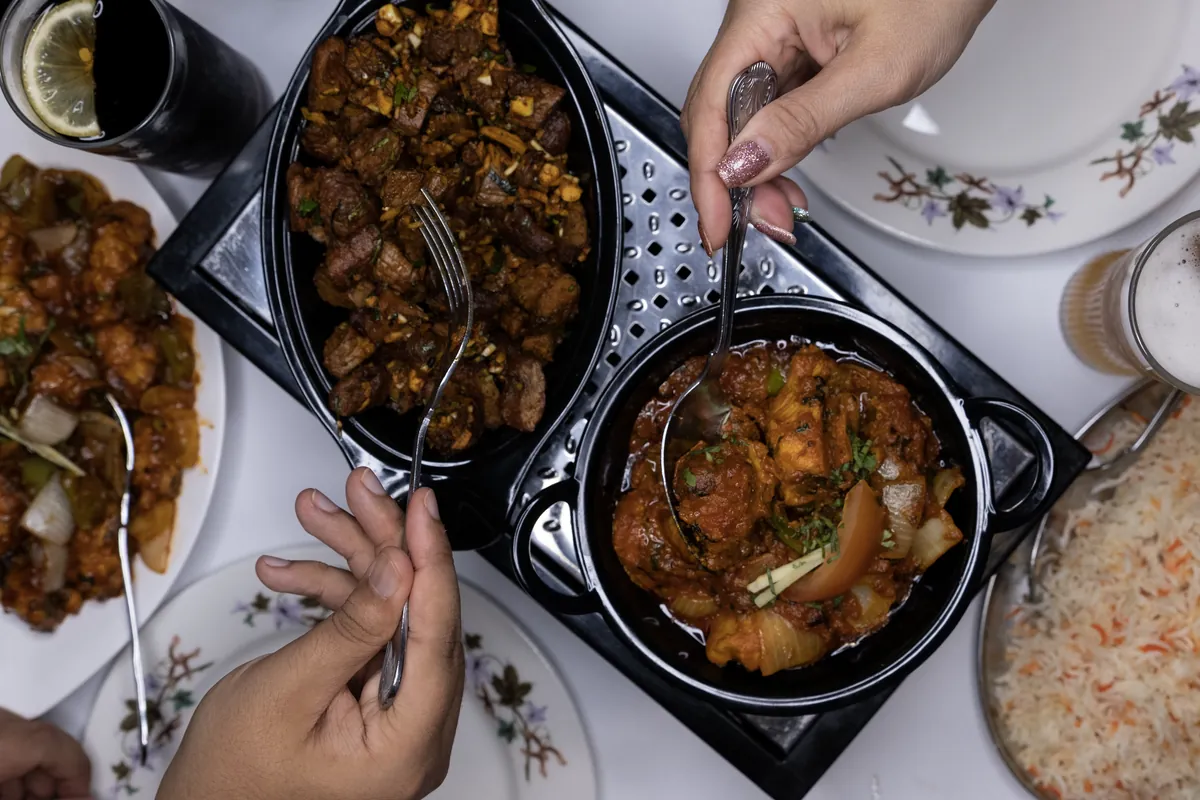
KormaMilk, cream and coconut powder
PasandaCream, onion, tomatoes and spices
BothMild, gluten-free and contain nuts
At The Great Kathmandu, Korma and Pasanda both cost £14.95, offer lamb or chicken and are marked mild, gluten-free and containing nuts. The ingredient descriptions separate them: Korma uses milk, cream and coconut powder; Pasanda uses cream, onion, tomatoes and spices. Choose Korma when coconut is the deciding flavour clue, or Pasanda when you prefer the onion-and-tomato direction.
- Meat choice
- Lamb or chicken for both
- Price
- £14.95 for either dish
- Heat
- Both marked mild
- Korma base
- Milk, cream and coconut powder
- Pasanda base
- Cream, onion, tomatoes and spices
- Shared markers
- Gluten-free; contains nuts
What is Korma?
Cambridge Dictionary defines korma broadly as a South Asian dish of meat, fish or vegetables in a sauce made with cream or coconut. Collins adds that korma can involve braising with water, stock, yoghurt or cream. A Smithsonian foodways account describes qorma as a meat stew generally cooked in yoghurt, while India's official Wazwan guide documents both coriander-and-ghee Daniwal Korma and chilli-led Marchwagun Korma. Those institutional examples reinforce that korma is a family of dishes, not one universal recipe or heat level.
Our Korma is specific: lamb or chicken cooked with milk, cream and coconut powder. The description does not list onion, tomato or individual spices, so we do not insert them from a generic recipe. Its coconut ingredient is the clearest published contrast with Pasanda. For another mild tomato-and-cream family, compare our makhani and makhanwala guide.
The heat label is shared; the sauce ingredients are where the choice becomes clear.
What is Pasanda on our menu?
Our Pasanda uses lamb or chicken with cream, onion, tomatoes and spices. It has no coconut ingredient in the published description. That onion-and-tomato profile is the most useful distinction for a diner choosing between the two dishes.
Pasanda recipes elsewhere may include yoghurt, ground nuts, coconut or different cuts of meat. We do not use those variations to reverse-engineer this kitchen. The dish’s contains-nuts marker confirms an allergen category but does not identify which nut or its exact form. Ask the team if that detail matters.
Which should you choose?
Choose Korma if the combination of milk, cream and coconut powder appeals. Choose Pasanda if you want cream alongside onion and tomato. Then choose lamb or chicken according to the rest of your table. If another dish already contains chicken, lamb can create more contrast, and vice versa.
Both pair naturally with rice or bread because they are sauce-led mains. Plain Boiled Rice or Pillau Rice keeps the sauce central; Nan, Roti or Chapati changes the texture of each mouthful. Use our bread guide and biryani-versus-pilau guide to choose an accompaniment rather than adding dishes at random.
For two diners, consider one creamy main plus a drier or more vegetable-led contrast. Our ordering guide offers a simple shared-table formula.
How do they compare with other mild dishes?
Korma and Pasanda are not the only dishes carrying a mild label. Makhan Chara uses chicken tikka in a rich tomato-and-cream sauce, while Makhan Paneer offers a vegetarian cheese-based main in the same broad sauce family. Makhan Fish and Makhan King Prawn take that style towards seafood. All four are also marked as containing nuts.
The practical distinction remains the published main ingredient and sauce description. Korma is the only one of this group to name milk and coconut powder together. Pasanda names onion and tomatoes. The makhan dishes explicitly say “rich tomato and cream.” Comparing those phrases is more dependable than assuming every mild curry will have the same sweetness, thickness or texture.
Are Korma and Pasanda suitable for special diets?
Both are marked gluten-free and mild, and both carry a contains-nuts marker. Milk and cream are named ingredients, so neither is dairy-free or vegan. Neither carries a vegetarian marker because the choices are lamb or chicken.
The menu does not name every ingredient or cross-contact risk. An explicit gluten-free marker is helpful, but diners with coeliac disease should still speak to the team. The Food Standards Agency advises businesses to provide current allergen information and manage cross-contamination; a direct conversation remains important.
Common questions
Is Korma always milder than Pasanda?
Both carry the same mild label on our menu. Restaurants elsewhere may prepare them differently.
Which one contains coconut?
Korma explicitly contains coconut powder. Coconut is not listed in our Pasanda description.
Do both contain nuts?
Yes, both carry the menu’s contains-nuts marker. Ask the team for current detailed allergen information.
Can I have either with lamb?
Yes. Both are available with lamb or chicken at the same listed price.
Source notes
Reviewed 19 September 2026. Where this guide mentions our restaurant, details are checked against the current dine-in menu. Wider cultural, historical and ingredient claims are checked against the cited sources below. How we research and correct our guides.
- The Great Kathmandu dine-in menu, consulted 18 September 2026, for ingredients, choices, prices, heat and dietary markers.
- Cambridge Dictionary: “korma”, for the broad cream-or-coconut definition.
- Collins English Dictionary: “korma”, for the wider family of braised korma dishes.
- Smithsonian Institution: South Asian Cooking, for a foodways account of qorma as a yoghurt-cooked meat stew and the wider cross-regional context.
- Incredible India: guide to Wazwan, for two documented kormas with different ingredients and heat profiles.
- Food Standards Agency: allergen guidance, for allergy-information context.
Find your family favourite.
Book our West Didsbury restaurant, family-run since 1986, or order delivery directly.