
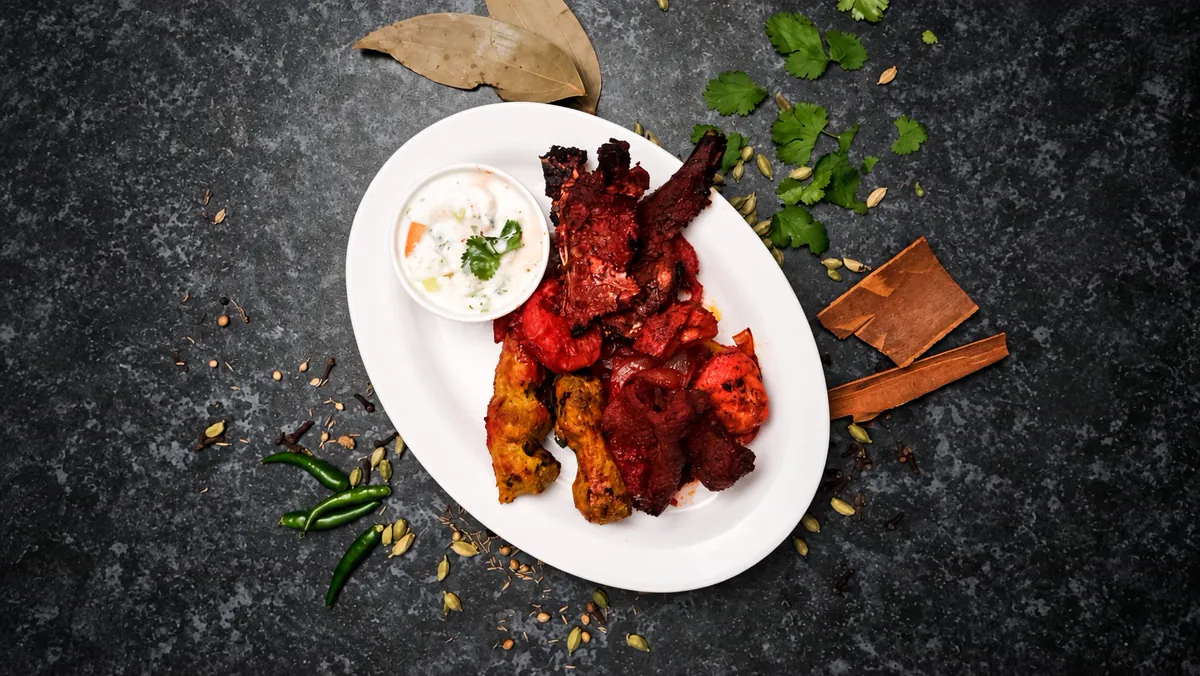
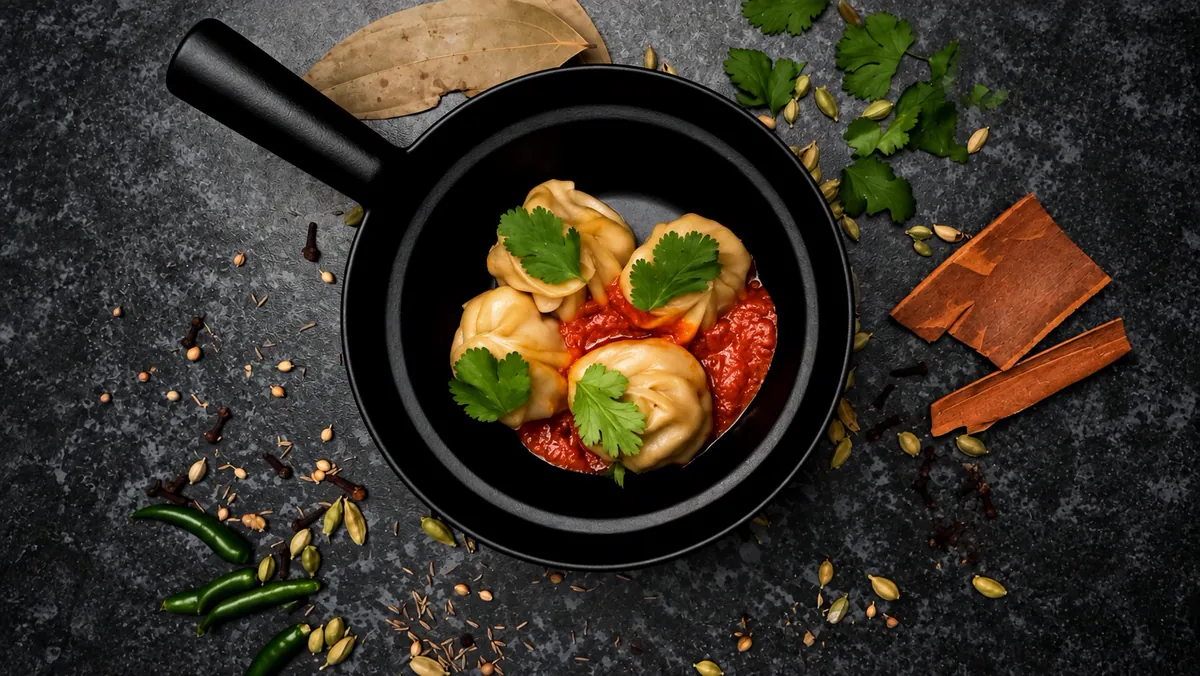
Nepalese and Indian food are related but not the same. Both encompass many regional cuisines and share ingredients and techniques; Nepal’s food also reflects Himalayan geography, varied communities and Tibetan influence. The Great Kathmandu serves Nepalese house dishes such as Mo:Mo, Choila and Aloo Tama alongside tandoori cooking and familiar Indian restaurant curries.
- The short answer
- Related through geography and exchange, but not interchangeable.
- Shared pantry
- Rice, lentils, vegetables, flatbreads, ginger, garlic and aromatic spices.
- Nepalese examples
- Mo:Mo, Kathmandu Choila, Kathmandu Bhotowan and Aloo Tama.
- Tandoor examples
- Tandoori chicken, chops, fish, paneer tikka, kebabs and breads.
- Heat level
- Neither label tells you how hot a dish will be; check the individual preparation.
Are Nepalese and Indian food the same?
No. “Nepalese food” and “Indian food” are broad labels for many cooking traditions. Nepal and India share a long border, trade, migration and ingredients, so overlap is expected. That overlap does not erase the dishes, communities and local histories that make each food culture distinct.
The Nepal Tourism Board describes Nepalese food habits as varying by region, with influences from Indian and Tibetan cooking and particular importance given to Newari and Thakali traditions. India is equally difficult to reduce to one style: a tandoori dish, a coastal fish curry and a southern lentil preparation do not represent one uniform cuisine simply because all are Indian.
The most useful approach is therefore specific. Ask what a dish is called, how it is prepared, what accompanies it and where the restaurant or family connects it to—not whether every ingredient belongs exclusively to one country.
Where do tandoor cooking and familiar curries fit?
At The Great Kathmandu, the tandoor is a cooking method rather than a shorthand for every Indian dish. Meat, seafood or paneer can be marinated, placed on skewers and cooked over charcoal; naan, roti and paratta are cooked in the charcoal oven. The result differs from a curry simmered in sauce.
The tandoor section includes Tandoori Chicken, Tandoori Chops, Fish Tikka, Jhinga Tandoori, Paneer Tikka and several kebabs. Some then appear in composed mains: Tandoori Chops Masala adds sauce to charcoal-cooked chops, while Tandoori Chicken Karahi combines chicken on the bone with onion, capsicum, tomato, garlic and ginger.
The menu also carries restaurant favourites familiar across Britain, including Korma, Madras, Vindaloo, Rogan Josh, Karahi and Tikka Masala. Their presence does not make the Nepalese dishes less Nepalese; it explains why the restaurant describes its cooking as both Nepalese and Indian.
What should I order for a first comparison?
A shared table makes the relationship easier to taste. Choose contrasting methods and textures instead of ordering several similar sauces.
A Nepalese-led table
Begin with Mo:Mo and Kathmandu Choila. Add Kathmandu Bhotowan or Aloo Tama, then rice and a vegetable dish such as Dal Tarka or Sag Dal. This route moves from dumplings to a dry spiced preparation and a pulse-based side.
A tandoor-led table
Start with Tandoori Mixed or Paneer Tikka. Follow with Tandoori Chops Masala or Tandoori Chicken Karahi, plus naan or roti from the charcoal oven. This compares food served directly from the tandoor with dishes that bring tandoori cooking into a sauce.
A mixed vegetarian table
Pair Onion Pakoda or Paneer Tikka with Aloo Tama, Sag Dal and Vegetable Pillau. Vegan options are marked for Mo:Mo and Namche Chilli, but guests with dietary requirements should always confirm ingredients and preparation with the team.
Source notes
The general description of Nepalese food and its influences was checked against Nepal Tourism Board material. All restaurant examples and dietary labels come from The Great Kathmandu’s current dine-in menu.