
Spices, explained
What is haldi?
Haldi is a widely used South Asian name for turmeric: the golden spice made from the rhizome of Curcuma longa. It contributes earthy flavour and intense colour, but a yellow dish cannot reveal its complete spice recipe.
HaldiA common name for turmeric
Plant partAn underground stem called a rhizome
Menu boundaryNo current dish explicitly names it
Haldi means turmeric in several South Asian language contexts. Culinary turmeric comes from the dried and ground rhizome—an underground stem—of Curcuma longa, a member of the ginger family. It colours food yellow-orange and adds an earthy, slightly bitter aromatic note. Our current menu does not name turmeric in any dish description, so this page does not claim where the kitchen uses it.
- Common name
- Turmeric; often called haldi
- Botanical name
- Curcuma longa
- Plant family
- Ginger family, Zingiberaceae
- Used part
- Rhizome, fresh or dried and ground
- Known for
- Yellow-orange colour and earthy flavour
- Our menu
- No item explicitly names turmeric
What plant does turmeric come from?
Kew identifies turmeric as Curcuma longa, a member of the ginger family. The spice comes from thick rhizomes below ground. A rhizome is a modified stem, not technically a root, even though “turmeric root” is common kitchen language. The plant is known only in cultivation and is propagated through rhizomes rather than viable seed.
Kew describes its exact origin as uncertain, most likely within South or Southeast Asia, and notes extensive cultivation across India and other tropical countries. That uncertainty matters: a simple claim that one modern country “invented” turmeric would overstate botanical evidence and thousands of years of human cultivation.
Fresh rhizome can be sliced or grated. For the familiar powder, rhizomes are cured, dried and ground. Processing, variety and storage all influence aroma and colour.
How is haldi used in cooking?
Kew records turmeric in curries, rice and pickles and as a food colour. India's ICAR-Indian Institute of Spices Research likewise identifies the rhizome as a culinary spice and natural colourant, with curcuminoid pigments responsible for its yellow colour. The form, quantity and point of addition still depend on the particular recipe.
It is a single plant ingredient, not another name for curry powder or garam masala. Garam masala is a blend whose recipe varies. Turmeric may occur in some broader spice blends, but it should not be assumed from the blend's name alone. Our Nepalese and Indian food guide gives a wider view of how ingredients, methods and family recipes interact.
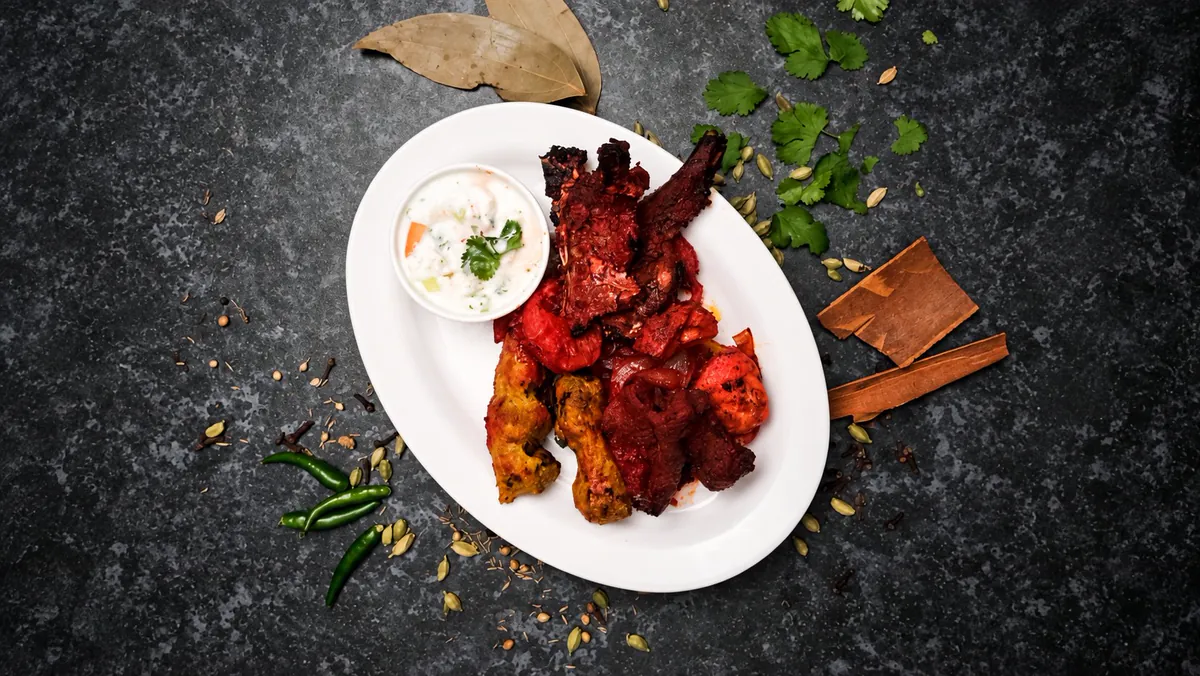
Turmeric can colour a dish dramatically, but colour alone cannot identify the rest of its seasoning.
Does yellow food always contain turmeric?
No. Turmeric is a powerful yellow-orange colourant, but saffron, food colouring and other ingredients can also colour food. Conversely, a dish containing a modest amount of turmeric may not look vividly yellow once tomato, greens, browning or other spices are present.
Nor does yellow indicate chilli heat. Turmeric is aromatic and earthy rather than a chilli. A dish can be richly spiced without being hot, and a pale dish can still contain chilli. Use the printed mild, hot and very-hot markers in our heat guide rather than reading heat from colour.
What about turmeric health claims?
Turmeric has a long history in food, dyeing and traditional practices. That history does not turn a restaurant portion into a medical treatment. The US National Center for Complementary and Integrative Health notes that research has examined turmeric and curcumin, but evidence is not sufficient to reach definitive conclusions for many promoted health uses.
Enjoy haldi as food and flavour. Anyone considering concentrated supplements—especially alongside medicines—should seek appropriate clinical advice. Restaurant guidance should not confuse culinary use with therapeutic dosage.
Common questions about haldi
Are haldi and turmeric the same?
In culinary use, haldi is a common South Asian name for turmeric.
Is turmeric a root?
It is commonly called a root, but the harvested plant part is botanically a rhizome, an underground stem.
Is turmeric spicy-hot?
No. It has an earthy, aromatic and sometimes bitter character; chilli heat comes from different ingredients.
Do you use turmeric at The Great Kathmandu?
The public menu does not specify it. Ask the team about a particular dish rather than assuming.
Source notes
Reviewed 19 September 2026. Where this guide mentions our restaurant, details are checked against the current dine-in menu. Wider cultural, historical and ingredient claims are checked against the cited sources below. How we research and correct our guides.
- The Great Kathmandu dine-in menu, consulted 18 September 2026, to establish that no current dish description explicitly names turmeric or haldi.
- Kew Science, Plants of the World Online: Curcuma longa, for botanical identity, origin uncertainty, processing and culinary context.
- ICAR-Indian Institute of Spices Research: turmeric, for rhizome use, culinary-spice context and curcuminoid colour.
- US National Center for Complementary and Integrative Health: Turmeric, for evidence-based caution around health claims and supplements.
- Food Standards Agency: allergen information for non-prepacked food, for advice to obtain current restaurant information.
Explore our West Didsbury menu.
Book our family-run restaurant, established in 1986, or order delivery directly from us.