
Spices, explained
What is elaichi?
Elaichi is a South Asian name for cardamom. Green cardamom brings a sweet, floral, citrus-like aroma; black cardamom is a different spice with larger pods and a deeper, smoky character.
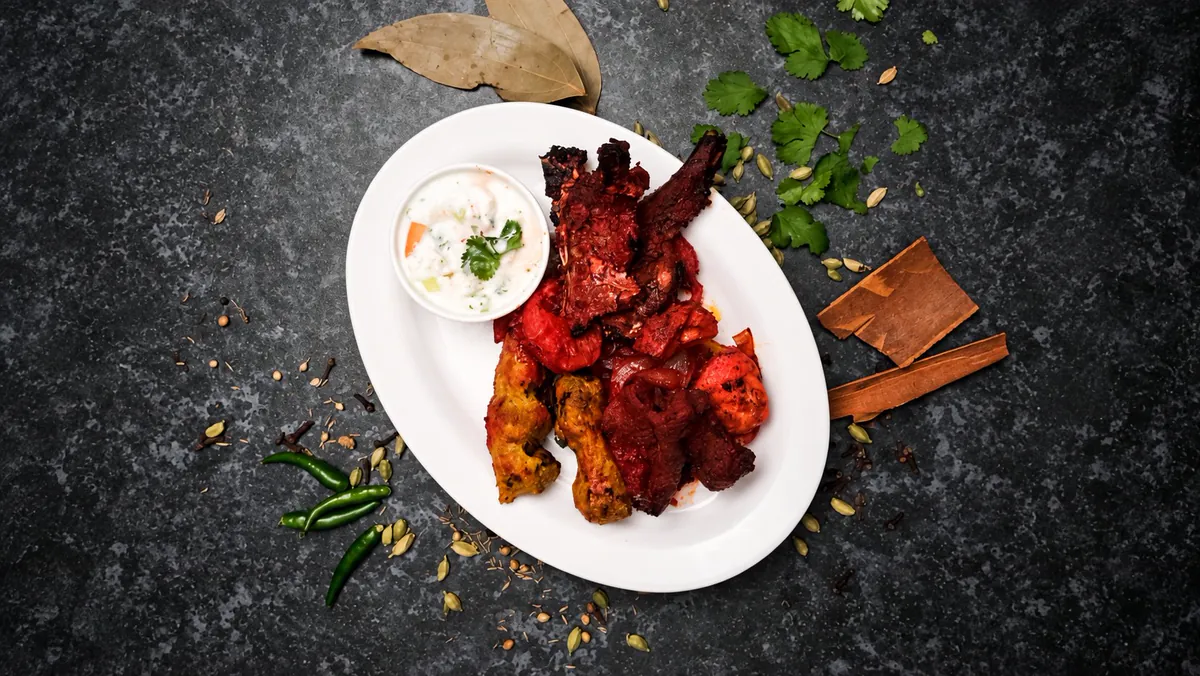
ElaichiA common name for cardamom
Green and blackDifferent plants and flavour profiles
Menu boundaryNo current dish explicitly names it
Elaichi means cardamom. Small or green cardamom generally refers to Elettaria cardamomum, whose aromatic seeds sit inside pale green pods. Black or large cardamom generally refers to a different species, Amomum subulatum, with bigger, darker pods and a smoky aroma. Our menu does not name cardamom in any dish, so this guide supplies general context rather than a house ingredient disclosure.
- Green cardamom
- Elettaria cardamomum
- Black cardamom
- Commonly Amomum subulatum
- Plant family
- Ginger family, Zingiberaceae
- Used part
- Aromatic seeds, often kept in pods
- Flavour
- Floral-citrus or deeper and smoky
- Our menu
- No dish explicitly names cardamom
What is green cardamom?
Kew identifies green cardamom as Elettaria cardamomum, a rhizomatous member of the ginger family native to south-west India. The plant produces pale green, oval fruits divided into chambers holding small aromatic seeds. The pods are harvested and dried, then traded whole or as seeds.
Kew describes the spice as aromatic, warm and spicy and records the fruits and seeds used whole or ground in savoury dishes, drinks and sweets. That broad range is well supported; a single, exact flavour comparison is not, because variety, processing, storage and preparation all affect what a diner perceives.
The phrase “green cardamom” is helpful because the unqualified English word cardamom sometimes covers several related spices. Botanical identity matters more than pod colour alone, since processing and age also change appearance.
Is black cardamom the same spice?
No. Kew identifies large or Nepal cardamom, Amomum subulatum, as a different species. Spices Board India explains that traditional direct-heat curing in a bhatti darkens the capsules and can produce a smoky smell, while indirect curing is intended to retain more of the spice's natural flavour. The familiar dark, smoky character is therefore connected to processing as well as species.
The two forms are not automatic one-for-one substitutes. A recipe should specify which kind it intends, and culinary practices vary across Nepal, India and neighbouring regions.
Nepal lies within the accepted native range Kew gives for A. subulatum, but “Nepali food” does not mean every dish contains it. Explore our Nepalese food culture guide for a broader view that avoids reducing a diverse cuisine to one spice.
Green and black cardamom share a common name, not an identical flavour or botanical identity.
How is elaichi used in cooking?
Kew documents green cardamom used as whole fruits or as seeds, and as a ground spice, across rice, meat and vegetable dishes, drinks and sweets. Whether pods are left whole, opened or ground is therefore a recipe choice rather than a rule attached to the name.
Cardamom can be one component of a mixture, but no fixed blend is guaranteed to contain it. Our garam masala guide explains why blend recipes change by cook, purpose and region. Aromatic spice also does not equal chilli heat; consult the heat guide for the menu's explicit labels.
Does cardamom determine dietary suitability?
No. A plant spice does not make a completed dish vegetarian, vegan or gluten-free. Suitability depends on every ingredient and on kitchen handling. A dish that uses cardamom might also contain meat, milk, nuts or other allergens.
Because the public menu does not identify cardamom use, diners with an allergy or strong sensitivity should speak to the team. Food Standards Agency guidance supports providing written allergen information alongside a direct conversation. For choices carrying explicit menu markers, see our vegetarian and vegan guide.
Common questions about elaichi
Are elaichi and cardamom the same?
Yes in broad culinary usage. A qualifier such as green, small, black or large identifies the type more precisely.
Can you eat cardamom pods?
They are used in cooking, but the fibrous husk is usually not the prized part. Many diners move a whole pod aside after it has flavoured the dish.
Is cardamom hot?
It is intensely aromatic but not a chilli. Black cardamom's smokiness can feel powerful without being chilli heat.
Does garam masala always contain cardamom?
No universal formula applies. Recipes vary, and a menu's word “masala” cannot confirm individual spices.
Source notes
Reviewed 19 September 2026. Where this guide mentions our restaurant, details are checked against the current dine-in menu. Wider cultural, historical and ingredient claims are checked against the cited sources below. How we research and correct our guides.
- The Great Kathmandu dine-in menu, consulted 18 September 2026, to establish that no current dish description explicitly names cardamom or elaichi.
- Kew Science, Plants of the World Online: Elettaria cardamomum, for green-cardamom botany, distribution, fruits and distinction from large cardamom.
- Kew Science, Plants of the World Online: Amomum subulatum, for the accepted botanical identity and distribution of large cardamom.
- Spices Board India: large cardamom, for curing methods and the spice’s smoky aroma.
- Food Standards Agency: allergen information for non-prepacked food, for UK restaurant allergen-information context.
Explore aromatic cooking in West Didsbury.
Book our family-run restaurant, established in 1986, or order delivery directly from us.