
Herbs and spices, explained
What is dhania?
Dhania is a South Asian name for coriander. The same plant gives cooks fresh leaves and dried fruits commonly called seeds, but those forms bring distinctly different aromas and are not automatically interchangeable.
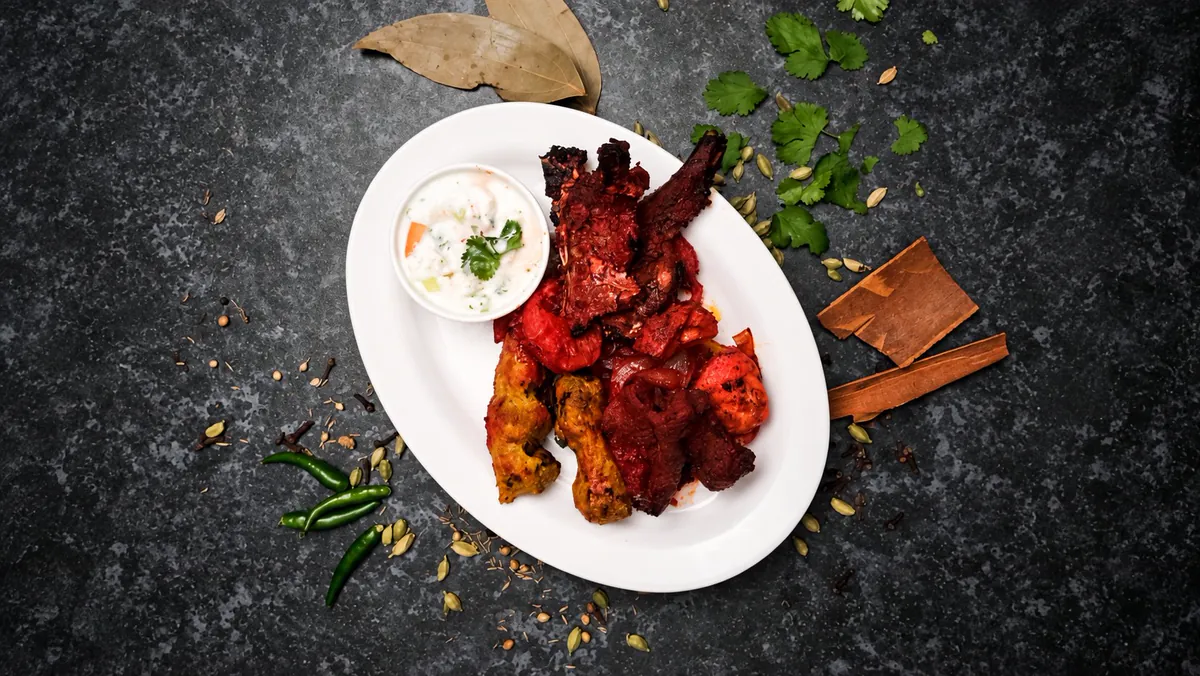
DhaniaA common name for coriander
One plantLeaves and dried fruits are used
Named twiceRani Chicken and a Nan
Dhania commonly means coriander, Coriandrum sativum. Fresh leaves taste green and aromatic; the dried fruits sold as coriander “seeds” are warmer and more rounded. Our menu explicitly names fresh coriander in Rani Chicken and coriander in Garlic & Coriander Nan. It does not state which form appears in any other dish.
- Botanical name
- Coriandrum sativum
- Plant family
- Apiaceae, the carrot family
- Fresh form
- Leaves and tender stems
- Dried form
- Fruits commonly called seeds
- Explicit menu uses
- Rani Chicken and Garlic & Coriander Nan
- Other recipes
- Not inferred from “herbs” or “spices”
What plant is coriander?
Kew identifies coriander as Coriandrum sativum, an annual herb in the Apiaceae family. Its native range is given broadly from the eastern Mediterranean to western Pakistan, and centuries of cultivation have spread it much farther. It is now used in many cuisines rather than belonging to one modern nation.
The plant produces leafy growth, small pale flowers and round fruits. Culinary language calls those dried fruits “coriander seeds,” even though botanically the whole dried fruit is usually what reaches the spice jar. Both leaf and fruit come from the same species, but maturation changes their chemistry and aroma.
“Dhania” can refer to the herb, the dried spice or coriander generally, depending on language and context. A recipe or menu description should provide the useful clue.
Do coriander leaves and seeds taste the same?
No. India's ICAR-Indian Institute of Spices Research records both the fresh leaves and dried fruits as culinary ingredients and describes the dried spice as warm, nutty and spicy, with a citrus note. The leaves are used as a fresh herb; the dried fruits may be used whole or ground. Recipes determine when and how each form is added.
Personal perception also varies. A peer-reviewed genome-wide association study found that reporting a soapy taste from coriander leaves has a small genetic component, while noting that the trait is not wholly determined by genetics. A soapy perception therefore does not mean the herb is spoiled, nor does it establish how someone will perceive dried coriander.
Neither form is inherently chilli-hot. Coriander can sit inside an aromatic blend, while heat comes from chilli or other pungent ingredients. See our garam masala guide for the difference between a named spice and a variable blend.
Fresh coriander and dried coriander come from one plant, but they perform different jobs in a dish.
How should coriander affect your choice?
If you enjoy fresh coriander, Rani Chicken is the clearest explicitly named option. Its mild marker refers to heat, not a lack of aromatic flavour. Garlic & Coriander Nan combines coriander with dry garlic in a stuffed nan; its own menu line does not publish further preparation details.
If fresh coriander tastes unpleasant to you, ask whether it can be omitted or whether it appears as a garnish in the dish you are considering. Do not assume every green garnish is coriander, or that every curry contains it. Our ordering guide helps build a varied table, and the bread guide compares Garlic & Coriander Nan with other choices.
Is coriander suitable for vegetarian or gluten-free diets?
The plant ingredient itself does not determine a finished dish's dietary status. Rani Chicken contains chicken. Garlic & Coriander Nan is not marked vegetarian, vegan or gluten-free on the current menu. We do not infer suitability from the presence of an herb or from the absence of a marker.
People can also be allergic to herbs and spices. If coriander must be avoided, tell the team rather than relying only on the short description, because recipes and garnishes can involve more than the headline ingredients. Food Standards Agency guidance supports direct conversation alongside written allergen information.
Common questions about coriander
Are dhania and coriander the same?
Yes in broad culinary usage, though context determines whether dhania means fresh leaves, dried fruit or the plant generally.
Is coriander the same as cilantro?
In North American English, cilantro usually means the fresh leaves while coriander means the dried spice. British English commonly uses coriander for both.
Is coriander hot?
No. It is aromatic, not a chilli. Rani Chicken is independently marked mild.
Which dishes definitely name it?
The current menu explicitly names fresh coriander in Rani Chicken and coriander in Garlic & Coriander Nan.
Source notes
Reviewed 19 September 2026. Where this guide mentions our restaurant, details are checked against the current dine-in menu. Wider cultural, historical and ingredient claims are checked against the cited sources below. How we research and correct our guides.
- The Great Kathmandu dine-in menu, consulted 18 September 2026, for restaurant-specific dish descriptions, prices, portions and markers.
- Kew Science, Plants of the World Online: Coriandrum sativum, for botanical identity, range and plant description.
- ICAR-Indian Institute of Spices Research: coriander, for the distinct culinary uses and described character of leaves and dried fruits.
- Eriksson et al., Flavour: a genetic variant near olfactory receptor genes influences coriander preference, for the qualified discussion of soapy-taste perception.
- Food Standards Agency: allergen information for non-prepacked food, for UK restaurant allergen-information context.
Taste the menu in West Didsbury.
Book our family-run restaurant, established in 1986, or order delivery directly from us.