
Nepalese ingredients, explained
What is khursani?
Khursani is a Nepali word for chilli. It can describe chillies broadly rather than one guaranteed variety, so a dish called “khorsani” should be understood from its own ingredients and heat guidance.
MeaningThe Nepali word for chilli
Not one varietyGreen, red, mild and hot forms exist
On our menuKhorsani Chicken or Lamb is marked hot
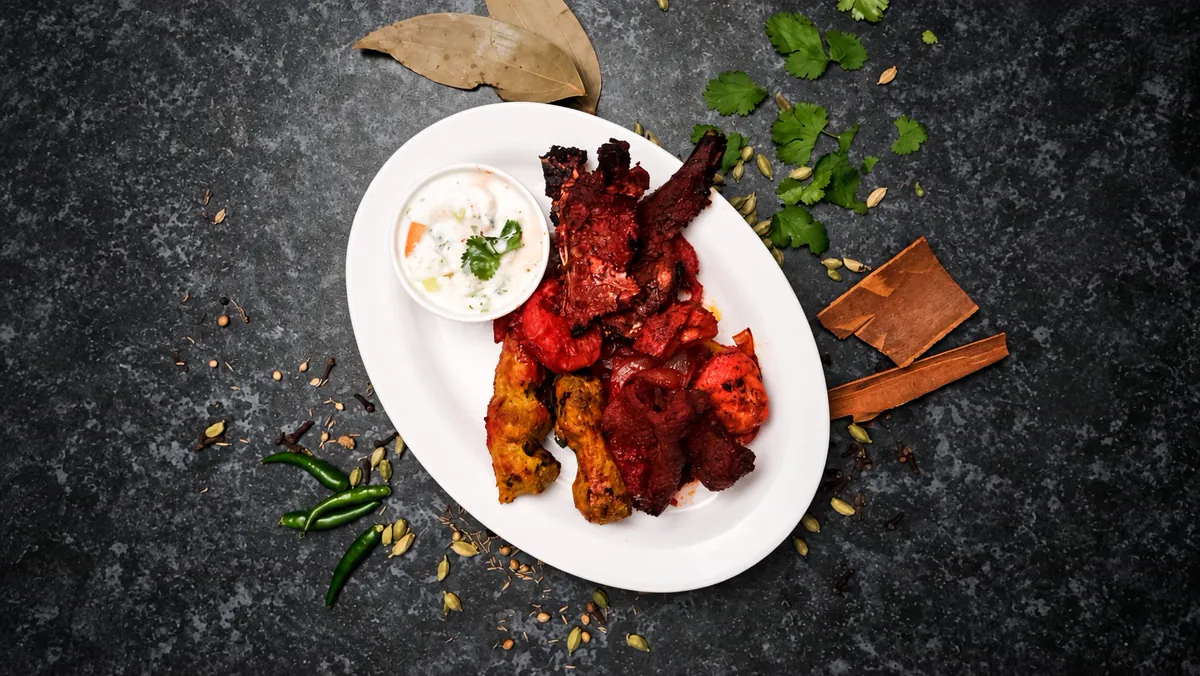
Khursani means chilli in Nepali. You may also see the spelling khorsani. Neither word guarantees one cultivar or one level of heat. At The Great Kathmandu, Khorsani Chicken or Lamb is a hot-rated house special cooked with fresh green chillies, ginger and spices.
- Meaning
- Chilli
- Alternative spelling
- Khorsani appears in research and on our menu
- One cultivar?
- No; the general term covers more than one kind
- Famous example
- Akabare khursani, a round red chilli associated with eastern Nepal
- Our dish
- Khorsani Chicken or Lamb
- Menu heat marker
- Hot
What does khursani mean?
In everyday terms, khursani is the Nepali word for chilli. An ethnobiological study of crops grown in far-western Nepal lists “khursani” in the local Doteli dialect and “khorsani” in Nepali for Capsicum annuum. It separately records bell pepper as “sage khursani” or “bhede khorsani”.
That table makes two points clear. First, English spellings can vary because Nepali words are being represented in the Roman alphabet. Second, the chilli family includes forms used for different levels and kinds of heat. “Khursani” is not automatically a secret spice blend or the name of one restaurant recipe.
Spelling variation is normal elsewhere in Nepalese food writing too. Our choila guide, for example, explains why “choila” and “chhoyela” can both appear in reliable sources.
Is khursani one particular Nepali chilli?
No. It is a broad word, though particular varieties have their own names. One widely discussed example is Akabare khursani, a round red chilli associated with eastern Nepal. Nepal Tourism Board identifies red round Akabare khursani among the important cash crops of Ilam.
Akabare is valuable cultural and agricultural context, but it must not be inserted into every menu description. Our current Khorsani dish says “fresh green chillies”; it does not name Akabare, Dalle or another cultivar. We therefore make no claim that a famous round red chilli is used in our kitchen.
Climate, seed, ripeness and preparation can all change a chilli’s character. Even chillies from the same broad species need not produce the same experience on a plate.
Khursani tells you that chilli matters. The individual dish tells you which ingredients and heat guidance actually apply.
Does khursani mean a dish will only taste hot?
Heat is only one part of chilli’s contribution. Fresh green chilli can bring brightness and a vegetal edge as well as pungency; dried or ripened chillies behave differently. The other ingredients and cooking method decide whether chilli feels sharp, rounded, fresh or deeply integrated.
It also helps to separate chillies from spice blends. Garam masala is a mixture of spices whose recipe varies; chilli is an ingredient that may or may not sit alongside it. Our guide to garam masala explains that distinction in more detail.
Nor should Nepalese food as a whole be labelled “very hot”. The restaurant menu includes dishes marked mild, hot and very hot, as well as many with no heat marker. Nepal’s broader food culture cannot be described by a single chilli setting.
How should you choose a chilli dish?
Start with the menu’s written heat marker rather than assuming from the cuisine or the colour of a sauce. Khorsani Chicken or Lamb is hot; Madras is hot; Vindaloo is very hot. Other choices are marked medium hot or mild. Individual sensitivity varies, so these labels are guidance rather than a universal measurement.
If chilli heat is central to your choice, ask the team before ordering. If you want to understand how Nepalese and Indian traditions meet on our menu, read our Nepalese and Indian food comparison.
Common questions about khursani
Are khursani and khorsani different?
They are spelling variants used when the Nepali word is written in English. Our menu uses “Khorsani”; an academic crop study records both forms.
Does khursani always mean Dalle or Akabare chilli?
No. Those are names associated with particular chilli traditions. The general word khursani does not prove that either variety is present.
How hot is your Khorsani dish?
The current menu marks it hot but gives no Scoville figure. Ask the team if you need help comparing it with other dishes.
Is Khorsani Chicken or Lamb gluten-free?
The current menu does not carry a gluten-free marker for it. Please discuss allergies and dietary requirements with the team before ordering.
Source notes
- The Great Kathmandu dine-in menu, consulted 18 September 2026, for dish names, descriptions, prices, choices and heat markers.
- Frontiers in Sustainable Food Systems: An Offering of Grain, especially its home-garden crop table, for the forms khursani and khorsani and their broad botanical context.
- Nepal Tourism Board: Hill Stations—Ilam, for Akabare khursani as an important crop in Ilam.
Choose your heat in West Didsbury.
Join our family-run restaurant on Burton Road, or order delivery directly from us.