
Fermentation and preservation
What is gundruk?
Gundruk is made by fermenting leafy vegetables and drying them for later use. Its tangy character belongs to a practical preservation tradition shared across Himalayan food cultures, with especially strong recognition in Nepal.
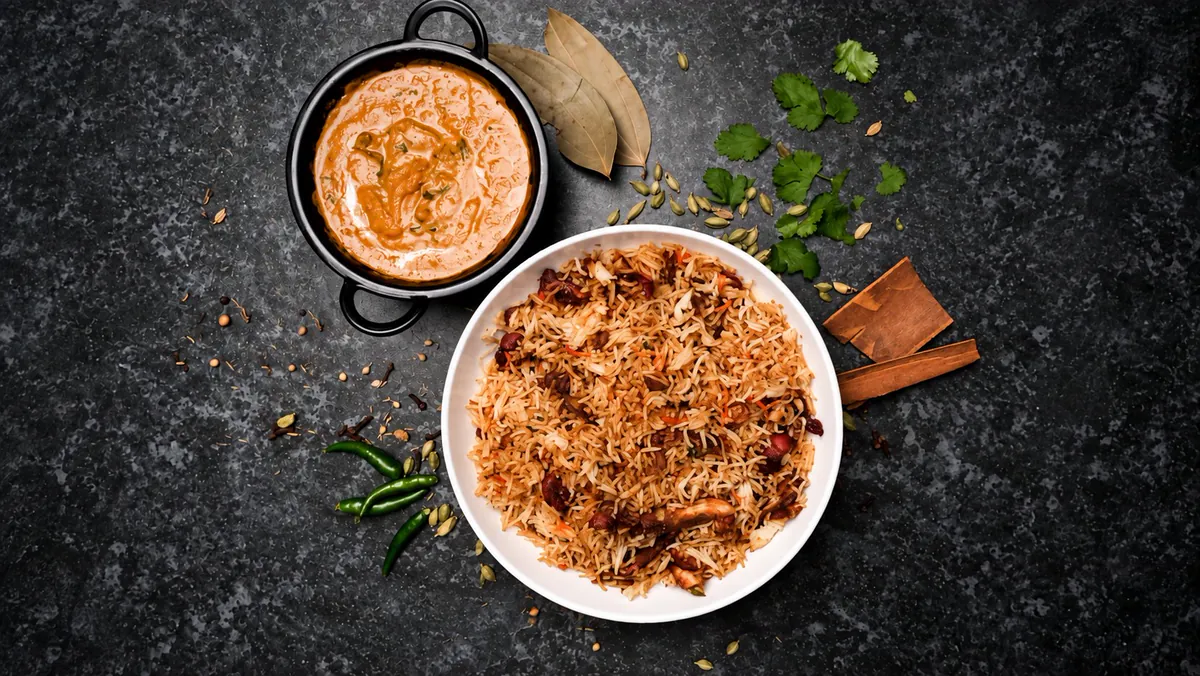
Leafy vegetablesMustard, radish or cauliflower leaves are documented
Lactic fermentationAcidity develops before drying
Used after storageIn soups, curries, pickles and sides
Gundruk is a fermented and dried leafy-vegetable food strongly associated with Nepal and the wider Himalaya. FAO describes a household process in which wilted leaves are packed, fermented until mildly acidic, then sun-dried. It can later be cooked into jhol, curries or pickles, but methods and leaves vary.
- Food type
- Fermented, dried leafy vegetables
- Documented leaves
- Mustard, radish and cauliflower
- Traditional salt use
- FAO describes a non-salted process
- Flavour
- Characteristically sour or tangy
- Purpose
- Preservation beyond the fresh season
- On our menu?
- No, gundruk is not currently listed
How is gundruk made?
FAO’s preservation guide describes surplus mustard, radish and cauliflower leaves being wilted, shredded, tightly packed and covered with warm water. After several days in a warm place, developing acidity signals fermentation; the leaves are then removed and sun-dried. Household knowledge determines timing, vessel and judgement.
That account is a documented traditional process, not a safe recipe for uncontrolled home preservation. Temperature, hygiene, acidity and storage matter. Commercial products may use standardised methods, and regional practices can differ. The key idea is a two-stage transformation: fermentation builds acidity and flavour, while drying makes the greens easier to keep.
What happens during fermentation?
FAO and peer-reviewed research identify lactic-acid bacteria as important participants in gundruk fermentation. These microorganisms use plant sugars and produce acids, lowering pH and creating the characteristic sourness. Research records changing populations over time rather than one permanent “gundruk bacterium”.
Fermented does not automatically mean probiotic in the marketing sense. Gundruk is commonly dried and later cooked, so live-microbe claims depend on processing and preparation. It is more accurate to celebrate flavour and preservation than to promise medical benefits. Our fermented-food guide explains that distinction.
Why did drying leafy greens matter?
Fresh leaves arrive seasonally and can exceed what a household can eat at once. Fermenting and drying turns that abundance into an ingredient for later months. FAO describes gundruk as a mineral source when diets may rely heavily on starchy tubers and maize, though it also reports nutrient losses during traditional sun-drying.
This is resourceful food knowledge, not evidence that Nepal lacked fresh vegetables everywhere. Climate, market access and household circumstances vary. The practice makes particular sense when harvest cycles and storage needs are considered together.
How is gundruk eaten?
Government and tourism materials describe gundruk used in curries, pickles, stews or a soup-like jhol. Rehydration softens the dried leaves, while cooking allows their acidity to season broth, pulses or vegetables. The precise balance of garlic, chilli, tomato or other aromatics belongs to the cook’s version.
Gundrukko jhol is documented as an accompaniment to dhindo, a cooked flour staple. Read our dhindo guide for that pairing. Fermented greens also sit within a much wider world of achar and preserved condiments.
Is gundruk only Nepali?
FAO calls it particularly popular in Nepal, while academic literature documents related production and consumption across Himalayan areas, including parts of India and Bhutan. Both facts can be true: gundruk has deep significance in Nepal without requiring a hard modern border around every fermented-leaf tradition.
Spellings and local terms may differ, as do raw materials. Cultural care means naming Nepal’s strong association while acknowledging the connected Himalayan food landscape. It also means avoiding claims that every Nepali household prepares or enjoys it in the same way.
Common questions
What does gundruk taste like?
It is characteristically tangy or sour, with flavour affected by the leaves, fermentation, drying and later cooking.
Is gundruk a pickle?
It can be prepared as a pickle, but dried gundruk is also cooked in soups, stews and curries.
Is it always made without salt?
FAO documents a traditional non-salted process; other makers and products may differ.
Is gundruk on the menu?
No. It is not listed on our current dine-in menu.
Source notes
Reviewed 19 September 2026. Where this guide mentions our restaurant, details are checked against the current dine-in menu. Wider cultural, historical and ingredient claims are checked against the cited sources below. How we research and correct our guides.
- FAO: Fermented fruits and vegetables, section on gundruk, for leaves, household processing, acidity, drying and seasonal use.
- FAO AGRIS: fermentation dynamics of gundruk and khalpi, for the research summary on lactic-acid bacteria.
- Government of Nepal: Mustang Baseline Agrobiodiversity Survey, for contemporary descriptions of gundruk uses.
- Nepal Tourism Board: heritage cuisine recipe book, for the gundrukko jhol and dhindo pairing.
- The Great Kathmandu dine-in menu, consulted 18 September 2026 to confirm gundruk is not listed.
Visit our family-run restaurant.
Join us in West Didsbury, where the Dangol family has welcomed Manchester since 1986, or order delivery directly from us.